Sashimi DC
·
Bluefin Tuna
Nagasaki, Japan · Washington DC · Ikejime Processed
Bluefin Tuna
Washington DC
Every cut of the fish, available in DC. From the buttery melt of Otoro to the extraordinary rarity of Hohoniku and Zuniku — Nagasaki Bluefin — processed in Miyazaki, flown Fukuoka–Haneda–IAD, never frozen.
Shop Bluefin Tuna
Can I buy sashimi-grade bluefin tuna in Washington DC, Virginia, or Maryland?
Yes — Sashimi DC carries ikejime-processed Bluefin Tuna from the Goto Islands, Nagasaki, flown direct from Japan. Available fresh in-store daily at 1608 14th St NW, Washington DC (inside Rice Market), and via same-day delivery across DC, Northern Virginia, and suburban Maryland. Order at shop.sashimidc.com.
As of September 2026.
Why Nagasaki Bluefin is Different
Not all Bluefin Tuna is equal. Ours comes from the Goto Islands of Nagasaki Prefecture — one of the few regions in Japan where the cold currents, pristine waters, and meticulous Ikejime harvest technique combine to produce fish of extraordinary, consistent quality. Every piece is processed at a specialist Miyazaki facility, then flown Fukuoka–Haneda–IAD for same-day pickup or delivery in Washington DC, Maryland, and Virginia.
Unlike most "sashimi-grade" fish in DC, which arrives previously frozen, our Bluefin has never been frozen. The fat content, texture, and umami are fully intact — the same quality served at Japan's top-tier omakase counters, available at your table.
Prefer a milder fish? Our sashimi-grade salmon, Sasshu Salmon, is land-raised in Kagoshima on Chiran tea feed and never frozen.
Ikejime Treated
Never Frozen
Fukuoka → Haneda → IAD
Goto, Nagasaki
Same-Day DC Delivery
Common Questions About Bluefin Tuna
Where does your Bluefin Tuna come from?
Our Bluefin Tuna comes from Nagasaki Prefecture, specifically the Goto Islands — one of Japan's finest Bluefin fishing grounds. It is processed by Hosei Suisan in Miyazaki under full NOAA SIMP catch certification, then flown Fukuoka–Haneda–IAD and available at our DC shop within approximately 48 hours of leaving Miyazaki.
What is Ikejime and why does it matter?
Ikejime (活け締め) is a Japanese slaughter technique: the fish is instantly dispatched via a brain spike, then exsanguinated (bled out), then the spinal cord is destroyed (shinkei jime — 神経締め). This stops stress hormones and lactic acid buildup immediately, preserves umami and firm texture significantly longer than conventional slaughter (K-value and ATP-retention studies: see sashimidc.com/ikejime-washington-dc#sources), and produces cleaner, more complex flavor. Without ikejime, passive suffocation stresses the fish — stress has a smell, and that smell stinks. Learn more at the Ikejime Federation (ikejimefederation.com).
Is your Bluefin Tuna fresh or frozen?
Never frozen at any stage. Our Bluefin Tuna is processed Ikejime at the farm, super-chilled during air shipment, and arrives at our shop within approximately 48 hours of leaving Miyazaki. We do not freeze it — slow domestic freezing creates ice crystals that rupture the cell walls and destroy the texture that makes sashimi-grade Bluefin worth eating. What freezing does to fish →
What is the difference between Otoro, Chutoro, and Akami?
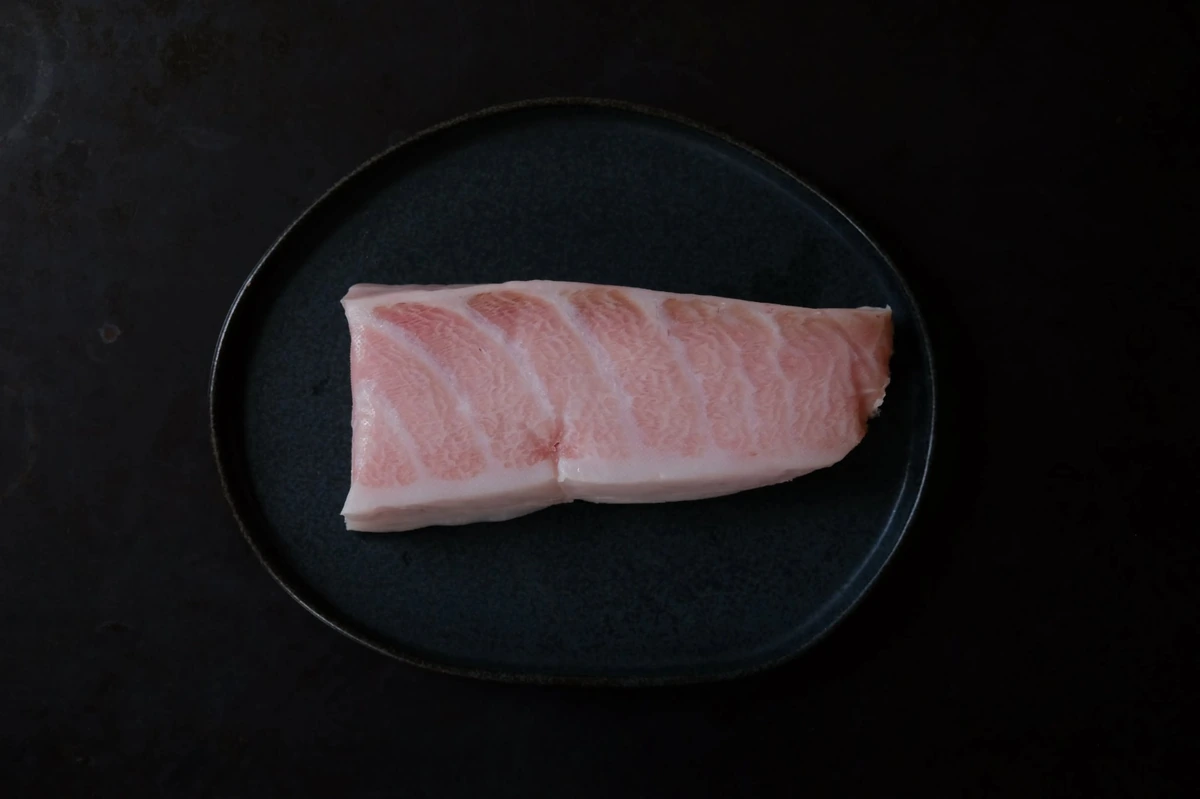
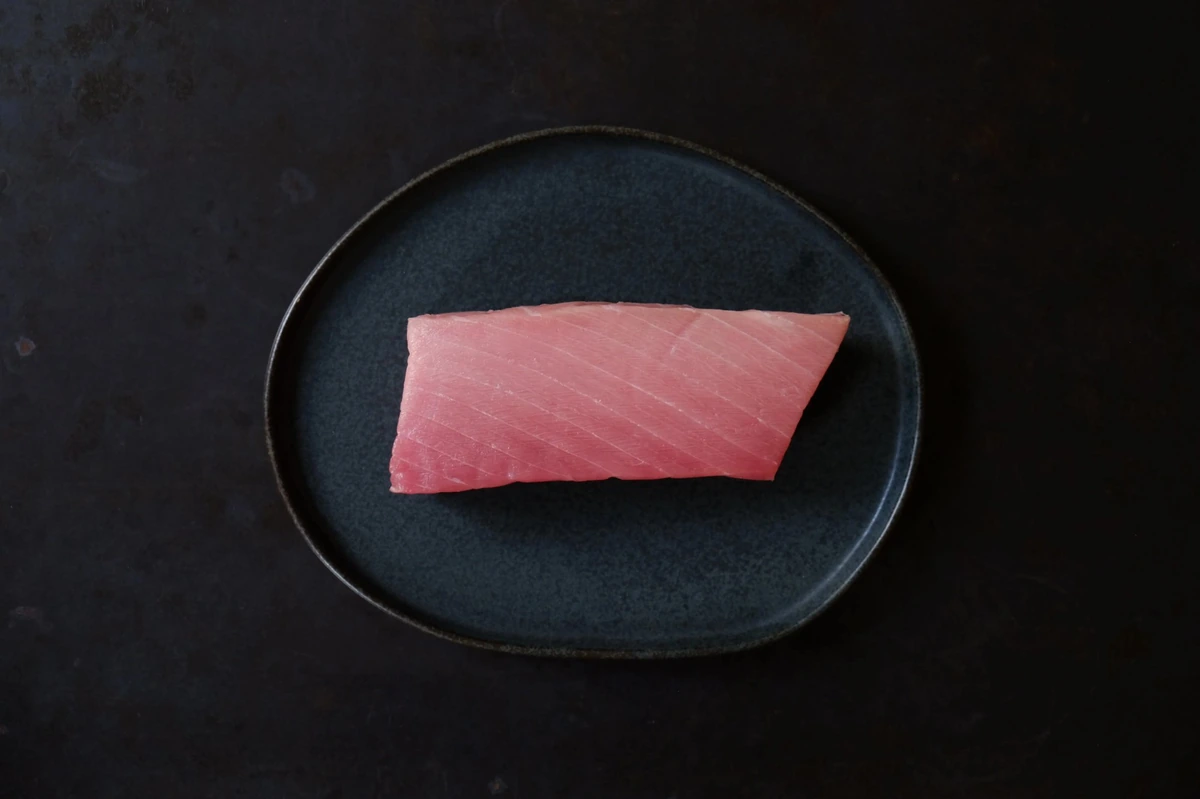
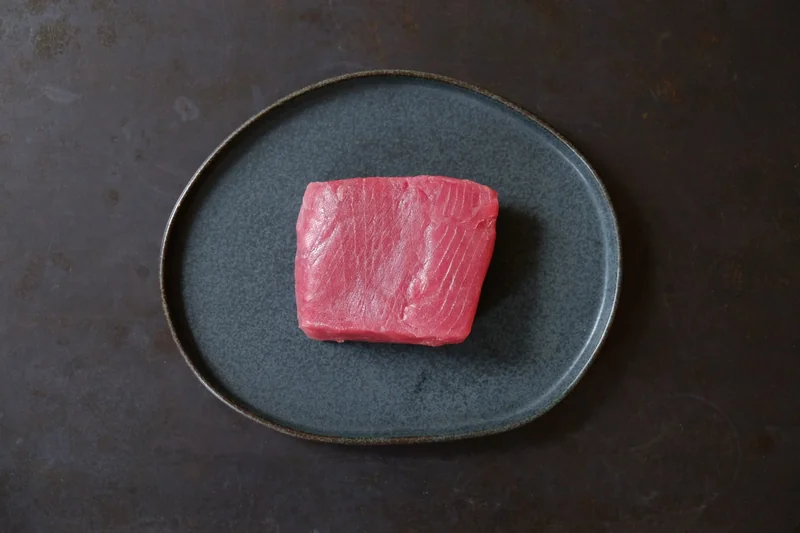
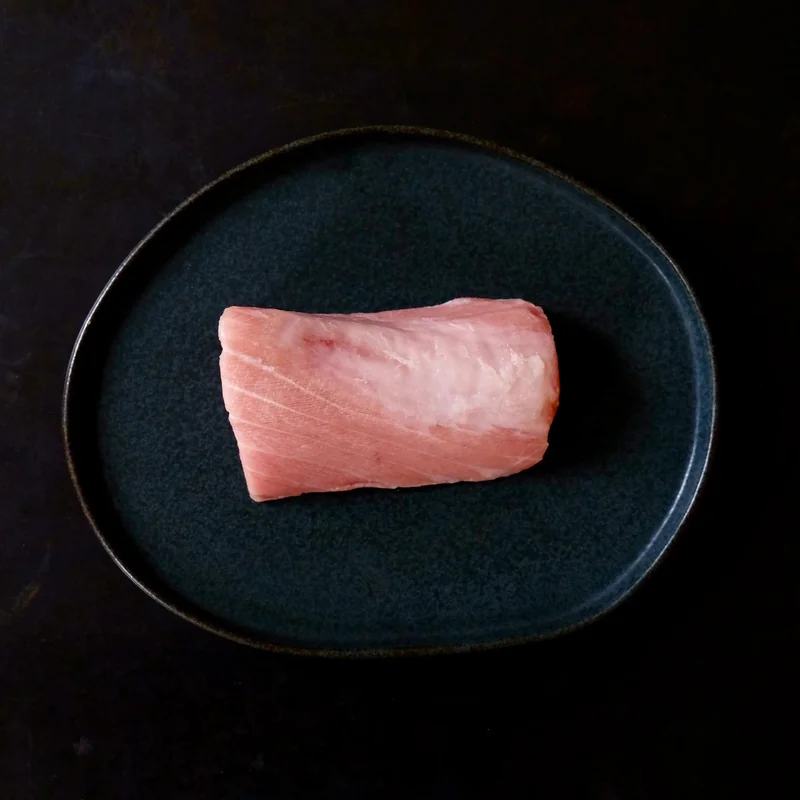
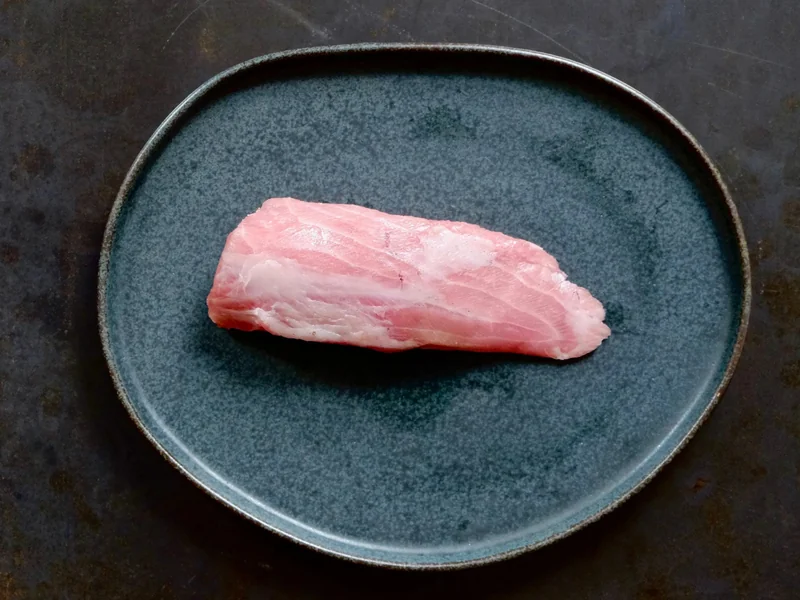
All three come from different sections of the same fish. Otoro (大トロ) is the fatty lower belly — the richest, most marbled cut, with a buttery texture that melts at body temperature ($74 / ~8 oz). Chutoro (中トロ) is the mid-belly — medium fat, balancing richness with clean tuna flavor ($60 / ~8 oz). Akami (赤身) is the lean red loin — deepest umami, firm texture, and the cut sushi chefs use to judge a fish's true quality ($55 / ~8 oz).
What are the rare cuts of Bluefin Tuna?
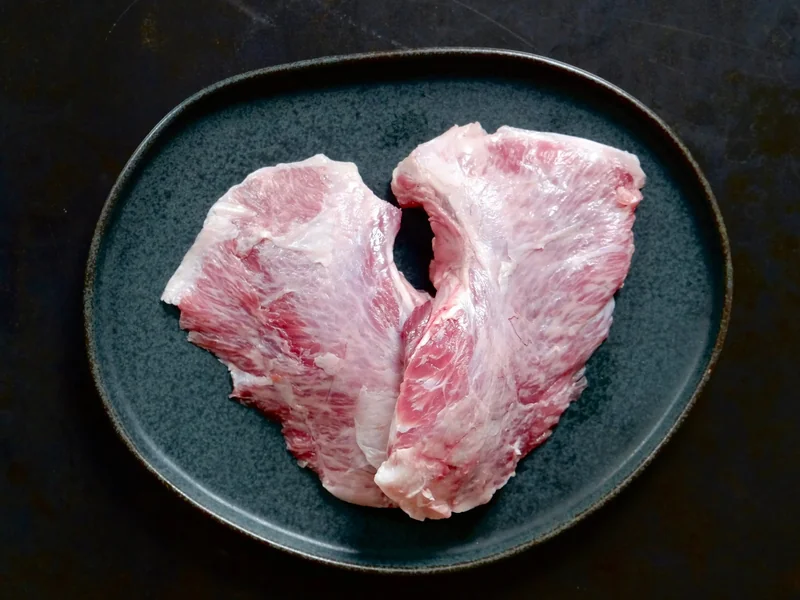
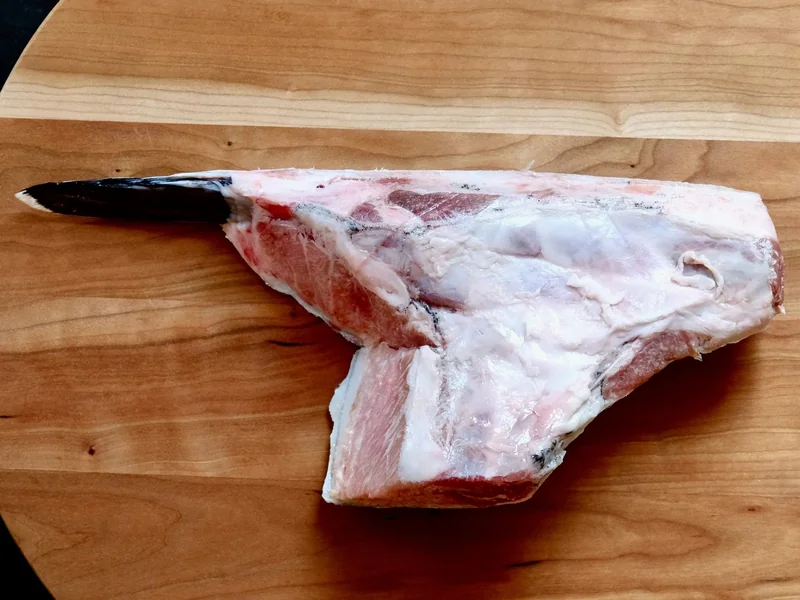
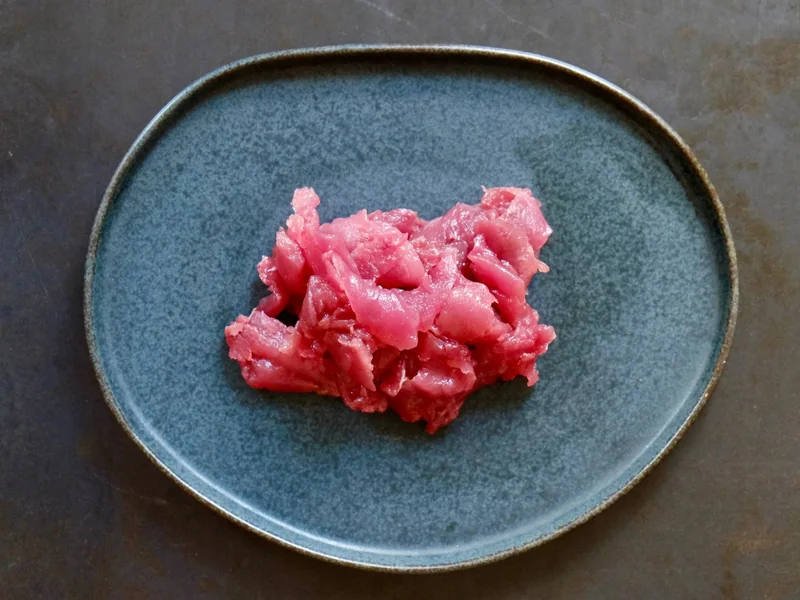
Beyond the standard four (Otoro, Chutoro, Akami, Sujitoro), we offer rare cuts when available: Hohoniku (頬肉 — cheek meat, only two small medallions per fish), Kama (鎌 — the collar, best grilled), Zuniku (頭肉 — head meat), and Nakaochi (中落ち — rib-scraped meat, ideal for negitoro). Follow @keita_sashimi_dc on Instagram for availability announcements.
Can I get Bluefin Tuna delivered same-day in Washington DC?
Yes. Order online at shop.sashimidc.com for same-day delivery 1:00–8:00 pm daily ($30 minimum) across Washington DC, Northern Virginia, and suburban Maryland. Pickup is available daily 11:30 am–8:00 pm at 1608 14th St NW, Lower Level, inside Rice Market. Fish arrives from Japan every Wednesday — Thursday and Friday are the best days to order, right after restock.
Is your Bluefin Tuna sustainably sourced?
Yes. All Bluefin Tuna at Sashimi DC is imported in full compliance with NOAA's Seafood Import Monitoring Program (SIMP) — a US federal regulation requiring catch documentation at every step: vessel name, fishing area, gear type, catch date. This means 100% traceable from ocean to your kitchen, with zero tolerance for black-market fish. The Goto Islands fishery operates under strict Japanese and international quota management.
How much Bluefin Tuna should I order per person?
Each cut (~8 oz) yields about 15 slices — enough for 2–3 people as part of a tasting spread, or a full portion for 1–2 as a main. Ordering two or more cuts (e.g. Otoro + Akami) comfortably serves 2–4.
How should I store Bluefin Tuna at home?
Keep vacuum-sealed in the coldest part of your fridge (back of the bottom shelf, 1–2°C). The TTI seal turns color if the cold chain is broken — a green TTI on arrival means it's safe; if it's triggered, contact us for a refund. Consume by the best-by date on the label, and do not freeze — freezing damages the texture of never-frozen Ikejime fish. Once opened, consume the same day.
Does Sashimi DC use CO treatment on its tuna?
No. Sashimi DC never uses CO treatment. CO reacts with myoglobin to form a permanently bright cherry-red or pink color — making tuna look fresh for weeks regardless of actual condition. CO treatment is banned in Japan, the EU, and Canada; permitted in the US. The same practice is used on beef, pork, and poultry via Modified Atmosphere Packaging (MAP). Our Akami is naturally dark red-purple — the true, unaltered color of fresh Bluefin Tuna. Vivid cherry-red tuna is a warning sign, not a quality signal. Full guide: CO treatment, Japan's MHLW ban criteria, and global regulatory status →
How long does fresh Bluefin Tuna last in the fridge?
Ikejime-processed Bluefin Tuna keeps for a few weeks from processing when stored vacuum-sealed at 1–2°C — the best-by date is set 15 days from processing at Miyazaki, accounting for transit time. It often reaches its umami peak several days after arrival as ATP converts to IMP (inosine monophosphate, the primary umami nucleotide in fish). This conversion is entirely autolytic — driven by the fish's own enzymes, not bacteria — so it proceeds predictably and safely inside the vacuum pack. Thursday delivery is excellent to eat Saturday or Sunday; the fish is improving, not declining, during that window. The TTI seal indicates if the cold chain was maintained during delivery. Once opened, consume the same day.
Does Sashimi DC's Bluefin Tuna contain mercury?
Yes, like all tuna, Bluefin contains some mercury — primarily methylmercury, which bioaccumulates over an animal's lifetime. Sashimi DC's Goto Islands Bluefin is farm-raised from wild-caught juvenile seed stock (天然種苗) and reaches harvest size in 2–3 years. Published data on Japanese farmed Pacific Bluefin shows a median mercury of ~0.40 mg/kg in biopsied muscle (0.41 mg/kg in heart ventricle; Takagi et al., 2025; Goto fish not individually tested) — less than half the FDA action level of 1.0 µg/g, and measurably lower than wild-caught adult Bluefin (which can exceed 1.0 µg/g; Colman et al., 2015). Farmed Bluefin also has a much better selenium-to-mercury ratio than wild-caught (5.48 vs. 1.32; Annibaldi et al., 2019), which further reduces the effective risk. Adults in good health can enjoy Bluefin in moderate quantities as part of a varied diet. Pregnant women, nursing mothers, and young children should follow FDA guidelines on tuna consumption.
How do I know the fish is fresh when it arrives — what should I look for?
Each pack includes a TTI (Time-Temperature Indicator) seal — check it first. If the TTI has not triggered, the cold chain is intact. Fresh sashimi-grade fish should smell clean and oceanic, not fishy or sour. Akami (lean tuna) will be naturally dark red-purple — never vivid cherry-red, which signals CO treatment. Otoro and Chutoro have white fat marbling but should never appear vivid pink; the flesh between the fat lines will be the same natural dark tone. Salmon will have bright, defined fat lines. If anything seems off on arrival, contact us — temperature-compromised deliveries receive a full refund.
Should I eat the fish the day it arrives, or let it rest?
Check the best-by date on the label — that is your outer limit. Keep the pack vacuum-sealed in the coldest part of your fridge (back, away from the door) to avoid temperature swings. The green TTI window confirms that time-temperature exposure stayed within the Skinner-Larkin curve for Botulinum toxin — your assurance that the cold chain held. Once you open the vacuum seal, consume within a couple of days. Once you slice the fish, consume that day.
Which bluefin tuna cut is best for poke?
Akami is the classic poke cut — lean, firm, and clean-flavored, it holds its shape under soy and sesame marinade. Chutoro works for a richer, more luxurious bowl but should be marinated briefly (under 10 minutes) and served immediately, as its fat softens quickly. Both are available at Sashimi DC, never frozen and never CO-treated. Cut into ¾-inch cubes, marinate to taste, serve over sushi rice.
Can I use bluefin tuna Akami for crispy tuna rice?
Yes. Akami is the recommended cut for crispy tuna rice — its firm, lean texture holds up on the crispy rice base and doesn't turn mushy. The intense umami cuts through spicy mayo or ponzu. Sashimi DC's Akami is sashimi-grade Goto Islands Bluefin — more than the dish strictly needs, but the quality is immediately apparent. Spoon on raw; do not torch the fish.