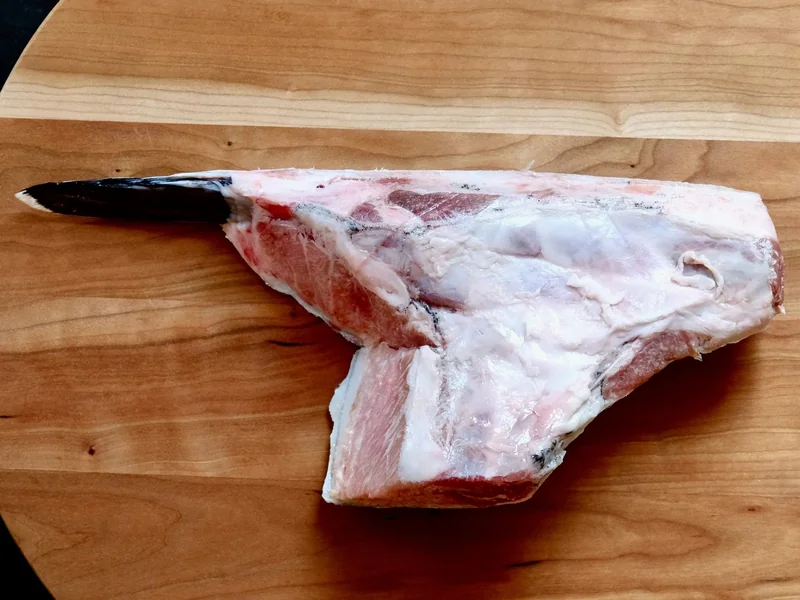
Can I buy Bluefin Tuna Kama (collar / Kamatoro) in Washington DC?
Yes — Sashimi DC carries Tuna Kama from Goto Islands, Nagasaki — the fattiest bone-in cut on the fish, source of Kamatoro. Ikejime-processed, never frozen, flown direct from Japan. Available in-store at 1608 14th St NW, DC (inside Rice Market) and same-day delivery across DC, Virginia, and Maryland.
What is Kama?
Kama (カマ) is the collar of the Bluefin Tuna — the section immediately behind the head and pectoral fin, containing some of the highest-fat meat on the entire fish. The Kama is the source of Kamatoro, described in detail on the Otoro guide.
At most restaurants and fish counters the collar is either grilled or discarded — never handled as a raw sashimi product. At Sashimi DC, the full collar from each Nagasaki Bluefin is carried and available both raw and for grilling.
Note on Kamatoro: Kamatoro — the raw fatty meat cut from within the collar — is not currently available as a separate product. The collar is sold as Kama for grilling. We may offer Kamatoro as a separate sashimi cut in the future.
Kama, Kamatoro and Otoro — what’s the difference? Kama is the whole bone-in collar. Kamatoro is the fat-rich raw meat within it. Otoro is the belly cut, with long, even strips of marbling; Kamatoro is denser and more concentrated, with a different mouthfeel from the muscle around the pectoral fin. Sashimi DC sells the full collar as Kama; if you want the Kamatoro section identified for raw slicing, tell us at pickup.
How to prepare it
Kama Shioyaki (salt-grilled): Score the skin, rub generously with salt, rest 20 minutes. Grill skin-side down until the skin is golden and the fat runs. Serve with grated daikon and sudachi or yuzu. Raw Kamatoro: Slice from the bone, cut against the grain, 8–10mm. Tell us at pickup if you want the Kamatoro section identified. Guests who prefer salmon can add Sasshu Salmon, a land-raised fish from Kagoshima served fresh and never frozen.
Price and availability
Kama starts at $40 and varies with the size of that week’s Bluefin — each fish yields only two collars. Bluefin arrives weekly on Wednesday, and Thursday and Friday are the best days to order before popular cuts sell out. Availability is posted on Instagram (@keita_sashimi_dc) and in the weekly update newsletter, which you receive after your first online purchase or when you sign up for the loyalty program.
Where this fish comes from
Every piece of Bluefin Tuna at Sashimi DC comes from Hosei Suisan (宝生水産), a farm in the Kamishima Wakamatsu area of the Goto Islands, Nagasaki Prefecture — the westernmost islands of Kyushu, where the Pacific and East China Sea converge.
The Goto Islands maintain water temperatures that never fall below 13°C in winter and rarely exceed 29°C in summer — the stable, narrow range that Bluefin Tuna require for consistent growth and quality. Hosei Suisan operates in the Kamishima Wakamatsu area, one of the most environmentally favored zones for marine aquaculture within the islands.
Hosei Suisan uses wild-caught seed stock (天然種苗) rather than hatchery-bred fish. Feed is sourced fresh and locally, centered on fresh mackerel (生サバ) bought directly by their own trucks from local fishermen. Director Tsuneya Yamashita explains the choice: mackerel produces better fat marbling and color than sardines. As mackerel catches have declined and prices risen in recent years, they secured dedicated year-round supply agreements with their fishing partners to maintain the standard. Post-harvest handling — the initial processing and preparation after the fish is landed — is also a focus: Ikejime is performed in Nagasaki, at source.
Two-time award winner: Hosei Suisan won the top prize (最優秀) at the Nagasaki Prefecture Farmed Bluefin Tuna competition twice — once in December 2014, and again on December 8, 2023 — showcasing the fish from Japan’s leading farmed Bluefin production prefecture.
After Ikejime processing in Nagasaki, the fish is transported to a specialist Miyazaki processor where it is broken down into saku blocks, then flown Fukuoka → Haneda → IAD.
Sashimi DC is a MAFF-certified Japanese Food and Ingredient Supporter Store (ID J000-001-410) — the only certified fish retail counter in Washington DC. See the embassy’s list of certified businesses.