What wines pair well with sashimi and raw fish without causing a fishy aftertaste?
Low-iron, cool-climate whites and certain reds pair best with raw fish. The fishy aftertaste from wine is caused by Fe²⁺ ions oxidizing DHA in fish fat — not tannins or residual sugar. Wines with low free iron (stainless-steel fermented, unoaked) suppress this reaction. Sashimi DC's seven winemaker partners are selected for low iron content and clean finish with raw fish.
The mechanism
Why wine makes fish taste fishy
Tamura et al. (2009) identified the primary culprit: ferrous iron (Fe²⁺) in wine. When Fe²⁺ comes into contact with the unsaturated fatty acids in seafood, it catalyzes their oxidation, generating aldehydes — the compounds responsible for the unpleasant fishy aftertaste many people experience when drinking wine with fish.
Iron enters wine through soil, winemaking equipment, and cellar environments. It exists in two forms: Fe²⁺ (ferrous, reduced) and Fe³⁺ (ferric, oxidized). It is Fe²⁺ specifically that drives lipid oxidation. As Danilewicz (2018) showed, the Fe²⁺ to Fe³⁺ ratio is strongly influenced by the wine's redox status — young, reductive wines carry more Fe²⁺; aged, oxidatively developed wines convert it progressively to Fe³⁺.
The short version: High Fe²⁺ = fishy aftertaste. Low Fe²⁺ = cleaner pairing. Wine-making choices and aging directly determine how much Fe²⁺ a wine carries.
A second, independent pathway was identified by Fujita et al. (2010): sulfur dioxide (SO₂), the preservative used in most wines but absent from sake, can react with DHA and other polyunsaturated fatty acids to produce aldehydes and increase bitterness when wine is consumed with seafood. This effect is more pronounced with cooked or dried seafood than with fresh raw fish — where the lipids are still intact within the cell matrix — so SO₂ is a secondary concern for sashimi pairings, not the primary one. It does, however, explain why sake is sometimes a cleaner pairing with cooked fish dishes than white wine.
Winemaking factors
What determines Fe²⁺ levels
Not all wines carry the same iron load. The vessel, the lees contact, and the age of the wine all affect how much Fe²⁺ ends up in the glass.
| Factor | Effect on Fe²⁺ |
|---|---|
| Concrete tanks | Higher iron content — concrete leaches minerals into the wine |
| Stainless steel | Lower iron — inert surface, no leaching |
| Sur lie aging | Lower Fe²⁺ — yeast lees adsorb iron, reducing its catalytic availability |
| Young, reductive wines | Higher Fe²⁺ ratio — reduction keeps iron in its ferrous form |
| Aged, oxidative wines | Lower Fe²⁺ — oxidation converts Fe²⁺ to Fe³⁺ over time |
| Decanting / aeration | Reduces Fe²⁺ — exposure to air accelerates oxidation of ferrous to ferric iron |
| Closure (screwcap vs. cork) | Screwcap and technical closures maintain ~97% of iron as Fe²⁺ — near-zero oxygen ingress keeps iron in its reactive ferrous form. Natural cork allows gradual O₂ exchange, converting some Fe²⁺ to less reactive Fe³⁺. For a fish dinner, natural cork is preferable; if serving a screwcap wine, decant first. |
Gil i Cortiella et al. (2021) found that vessel choice during white wine production significantly affects the iron speciation in the finished wine — a principle that extends across all wine types. Notably, uncoated concrete vessels can increase iron content by up to 400% compared to stainless steel, because the wine contacts the porous mineral surface directly; this additional iron is primarily in the reactive Fe²⁺ form. Danilewicz (2018) further showed that wines sealed under screwcap maintain roughly 97% of their iron as Fe²⁺, because near-zero oxygen ingress prevents the Fe²⁺-to-Fe³⁺ conversion that happens with natural cork. Both findings point in the same direction: the more a wine is protected from oxidation during aging and storage, the more reactive iron it carries into the glass.
The case for red wine
Red wine and fish — it works
The conventional wisdom — white wine with fish, red wine with meat — contains real chemistry. High-tannin, extracted reds cause problems because their iron load is higher, their reductive character stronger, and their tannins interact unpleasantly with fish proteins. But this is not a rule about red wine itself; it is a description of what goes wrong with a specific style of red wine.
What works well is wine with vibrant acidity that cuts through the fat of the fish, without excess oak or forward fruit that would compete with delicate fish aroma. Restrained, cool-climate reds — Pinot Noir being my personal preference — carry less Fe²⁺, let the fish speak, and the acidity creates a clean, lively interplay with fat. But it is not only Pinot Noir: Six Cloves' Zinfandel, for instance, is a genuinely good companion to Bluefin Tuna — enough structure to meet the umami, enough freshness to avoid the iron problem.
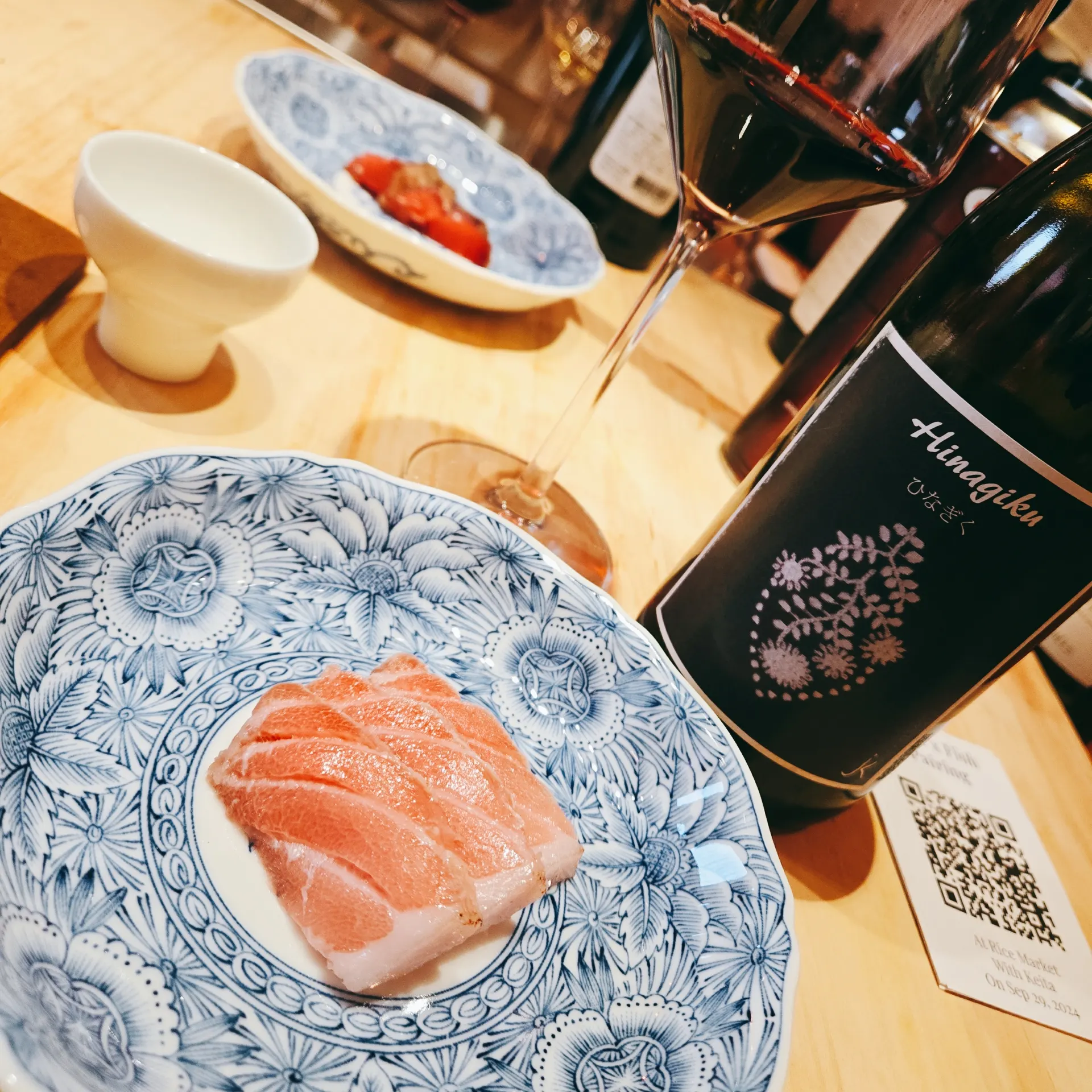
There is also a case for slightly more structured reds with fattier fish — Otoro, Sasshu Salmon belly, mackerel. Žižka & Zelený (2022) found that when a red wine's body and alcohol level are high enough to dominate the pairing, it can actually mask excess fat effectively rather than clashing with it. The structural dominance that would overwhelm a lean Akami becomes an asset with a marbled Otoro. This is why Keiko et Jérôme's Hinagiku (Syrah) works with Otoro where a lighter red might not — the fat needs something to push back against.
Practical tip: Decant any red wine before serving with fish — even 20 minutes of air contact accelerates the conversion of Fe²⁺ to Fe³⁺, meaningfully reducing the risk of fishy aftertaste.
Preparation
How you prepare the fish matters too
Wine choice alone doesn't solve the problem. Several preparation approaches chelate Fe²⁺ directly at the fish surface — binding it before it can catalyze oxidation — or create physical barriers that limit the reaction.
Chelation
Shoyu (soy sauce)
Rich in melanoidins and flavonoids that chelate Fe²⁺ and inhibit lipid oxidation. The classic pairing of soy with sashimi has chemical as well as culinary logic.
Chelation + pH
Citrus (lemon, sudachi, yuzu)
Citric acid forms stable chelate complexes with Fe²⁺ and lowers the local pH — both slow Fe²⁺-mediated oxidation of unsaturated fatty acids.
Barrier + chelation
Olive oil
Polyphenols — particularly hydroxytyrosol and oleuropein — chelate Fe²⁺. The oil also forms a physical barrier around the fish, limiting oxygen exposure and further reducing lipid oxidation.
Maillard reaction
Torching (Aburi)
The Maillard reaction produces melanoidins at the fish surface, which chelate Fe²⁺ and reduce its catalytic activity. Evaporating surface moisture further limits lipid exposure to oxidation.
The combination of restrained wine and thoughtful preparation is not overcautious — it is why a glass of Pinot Noir alongside Aburi Otoro with a drop of sudachi can work beautifully when the same pairing with a different wine and no preparation would not.
Wine vs. sake
Two different pairing logics
Wine and sake are both excellent companions to raw fish — but for fundamentally different reasons. Understanding the distinction makes both pairings more deliberate.
Wine pairs with raw fish by not interfering. The goal is to avoid triggering lipid oxidation (low Fe²⁺, low SO₂, high acidity) while providing aromatic and textural counterpoint. A well-chosen wine does not amplify the fish's flavour — it frames it.
Sake pairs with raw fish by amplifying umami. A UHPLC analysis by Schmidt, Olsen & Mouritsen (2021) across eight sakes, nine wines, nine champagnes, and five beers found that sake samples held the highest concentration of free glutamic acid of any beverage category tested. The mechanism is receptor-level: glutamate from sake and free 5′-ribonucleotides (IMP, GMP, AMP) from the fish bind simultaneously to the T1R1/T1R3 umami receptors, producing a synergistic effect the researchers describe as enhancing perceived umami "manifold." This is not a vague 'flavour enhancement' — it is a specific allosteric interaction at the taste receptor. Sake's low iron content also avoids the fishy-aftertaste mechanism entirely, giving it a double advantage over wine with raw fish.
One implication worth noting for wine drinkers: wines with extended lees contact — sur lie whites, traditional-method sparkling — contain measurably higher free glutamate than standard whites (Schmidt et al. 2021). Franceschi et al. (2023) quantified this directly in Italian whites: batonnage (stirring the lees back into suspension) increased glutamate by more than 60%, with the longest-aged batch reaching 58.76 mg/L. That is still well below the roughly 0.3 g/L (300 mg/L) threshold at which glutamate is directly tasted as umami — so the effect is not a louder "umami" note, but a flavor enhancer: the same study found lees-aged wines scored higher on perceived saltiness, taste persistence, and aroma intensity even though the umami taste itself stayed largely below threshold. Sake's glutamate levels remain well above this in absolute terms, but the difference between a Champagne aged on lees and a generic Chardonnay is palate-detectable when eating tuna. This is part of why the Goodfellow Blanc de Blancs works so well with Bafun Uni — its yeast contact adds a layer of amino acid complexity that interacts with the Uni's sweetness in a way a simple unoaked white would not.
There is a third factor that operates alongside the chemistry: familiarity. Research on sake and food palatability (Nakamura et al., 2017; Fushiki et al., 2021) identifies three subdomains that shape how good a beverage tastes with a meal — rewarding (the direct sensory pleasure of the combination), cultural (prior experience and learned association), and informational (knowledge of what you are tasting). Rewarding is consistently the dominant factor, but for more experienced or selective drinkers, the cultural and informational factors become meaningful secondary predictors — simply being familiar with a pairing, or knowing the provenance and quality of what is in the glass, measurably shifts how good it tastes. The chemistry creates the floor; prior experience with a pairing raises the ceiling. This is one of the things the Fish & Wine Pairing evenings at Rice Taste Kitchen are designed to build — not just to teach pairings, but to create the familiarity that makes them work better each time.
Neither logic is superior — they are different tools. A course of Akami with aged Burgundy Pinot Noir is one kind of experience; the same fish with a premium Junmai Daiginjo is another. Both are valid and intentional. At the Fish & Wine Pairing evenings at Rice Taste Kitchen, we explore both.
Our winemakers
The wines we pour at Sashimi DC
Every wine at Sashimi DC has been chosen with fish in mind — acidity, restraint, and winemaking approach first. The seven producers below share a philosophy of minimal intervention and transparency. A note on the vineyard connection: Perkins Harter grow the fruit; Violin Wine (currently) and Shiba Wichern Cellars (from the 2025 vintage) make wines from their Bracken Vineyard grapes.
Oregon — McMinnville
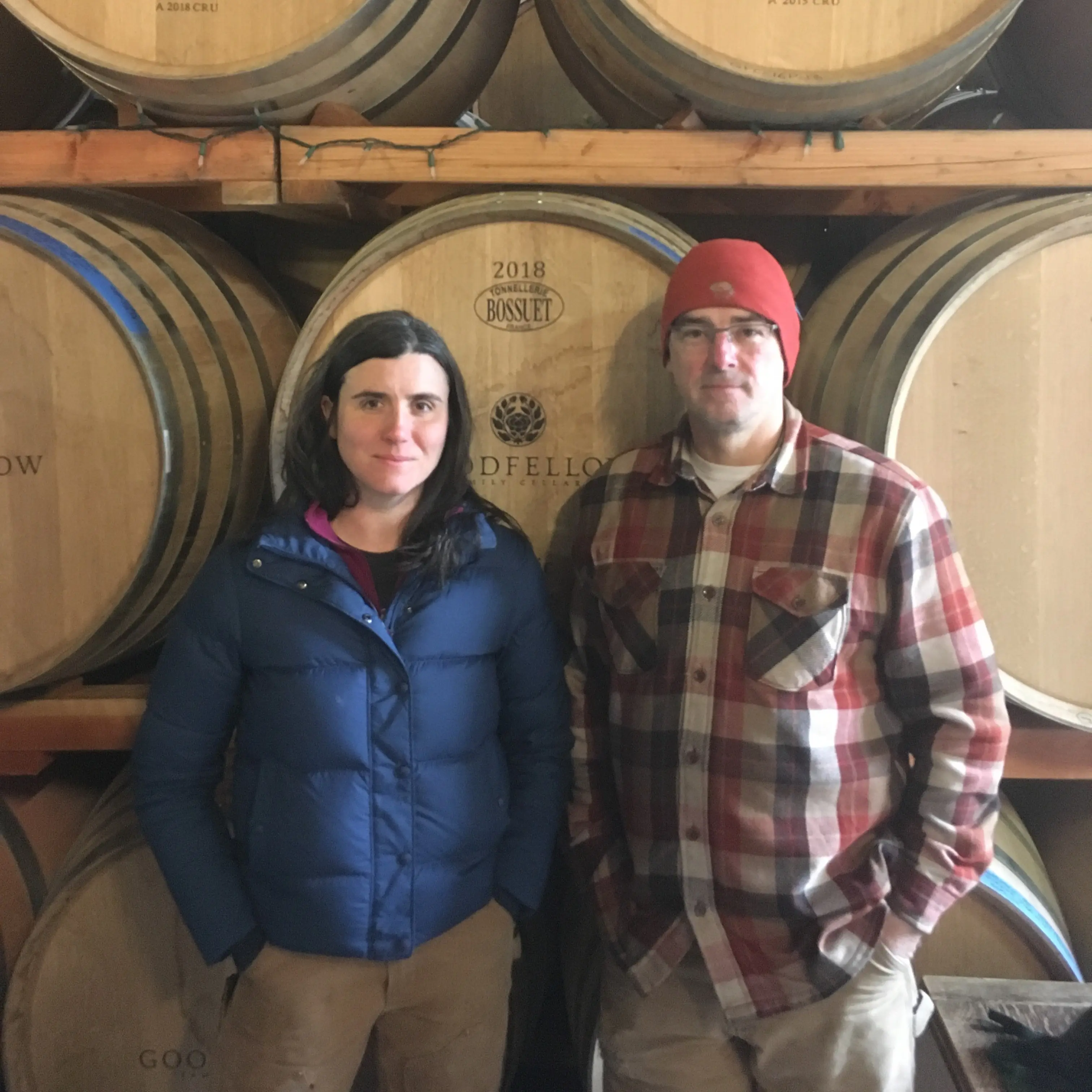
Goodfellow Family Cellars
Serious, age-worthy Pinot Noir and Chardonnay alongside an interesting field blend and a Riesling for more casual occasions. Their sparkling program already achieves real quality and pairs brilliantly with Uni and Hotate. Wines built to last and to pair.
Oregon — Eola-Amity Hills
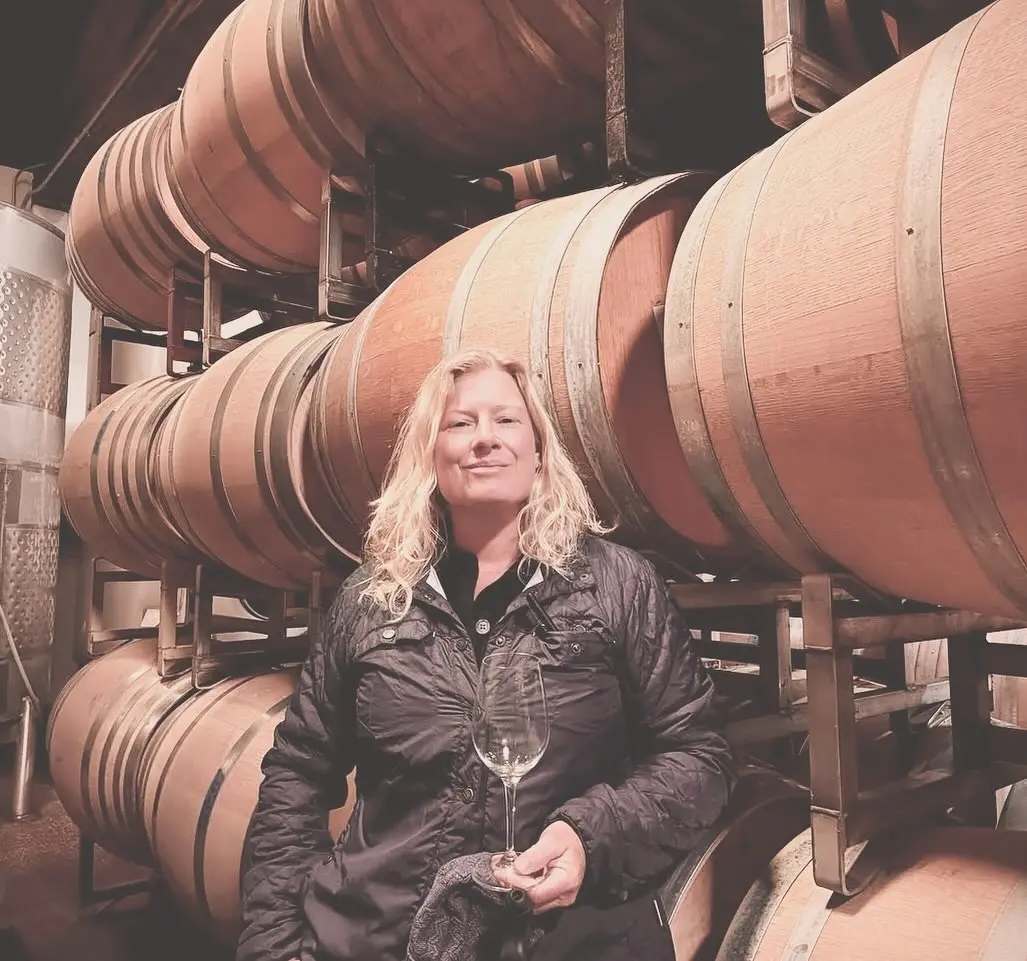
Perkins Harter
Growers as well — they farm the fruit that Violin Wine and Shiba Wichern Cellars vinify. Their own wines carry a genuine, direct expression of the vineyard: Pinot Noir and Chardonnay with a straightforwardness that tells you exactly where the grapes came from. No elaboration needed.
Oregon — Eola-Amity Hills
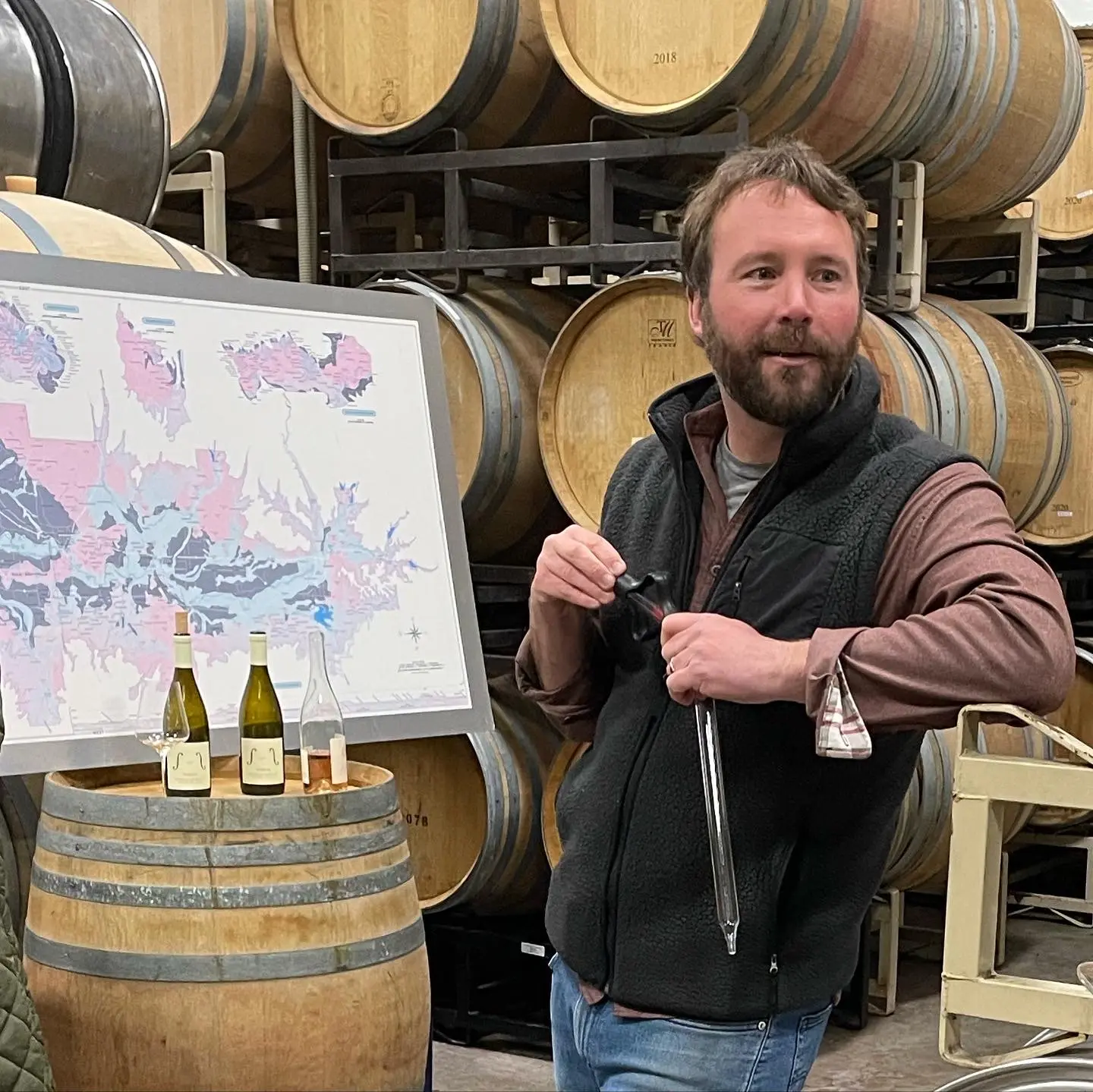
Violin Wine
Founded in 2013 by Will Hamilton, a Maryland native. Violin has been pursuing electricity in their wines from the start — precise tension, vibrant acidity and balanced structure that sets them apart. Even the entry-level Willamette Valley Pinot Noir and Chardonnay are excellent. Single-vineyard cuvées are another level. No commercial yeast since vintage one, dry-farmed grapes including from Perkins Harter's Bracken Vineyard. The Sojeau 2021 Chardonnay is drinking superbly right now. And the X-Omni 2022 Pinot Noir — a single vintage from a vineyard they never returned to — remains my favourite bottle from this producer. I am still missing it.
Oregon — McMinnville
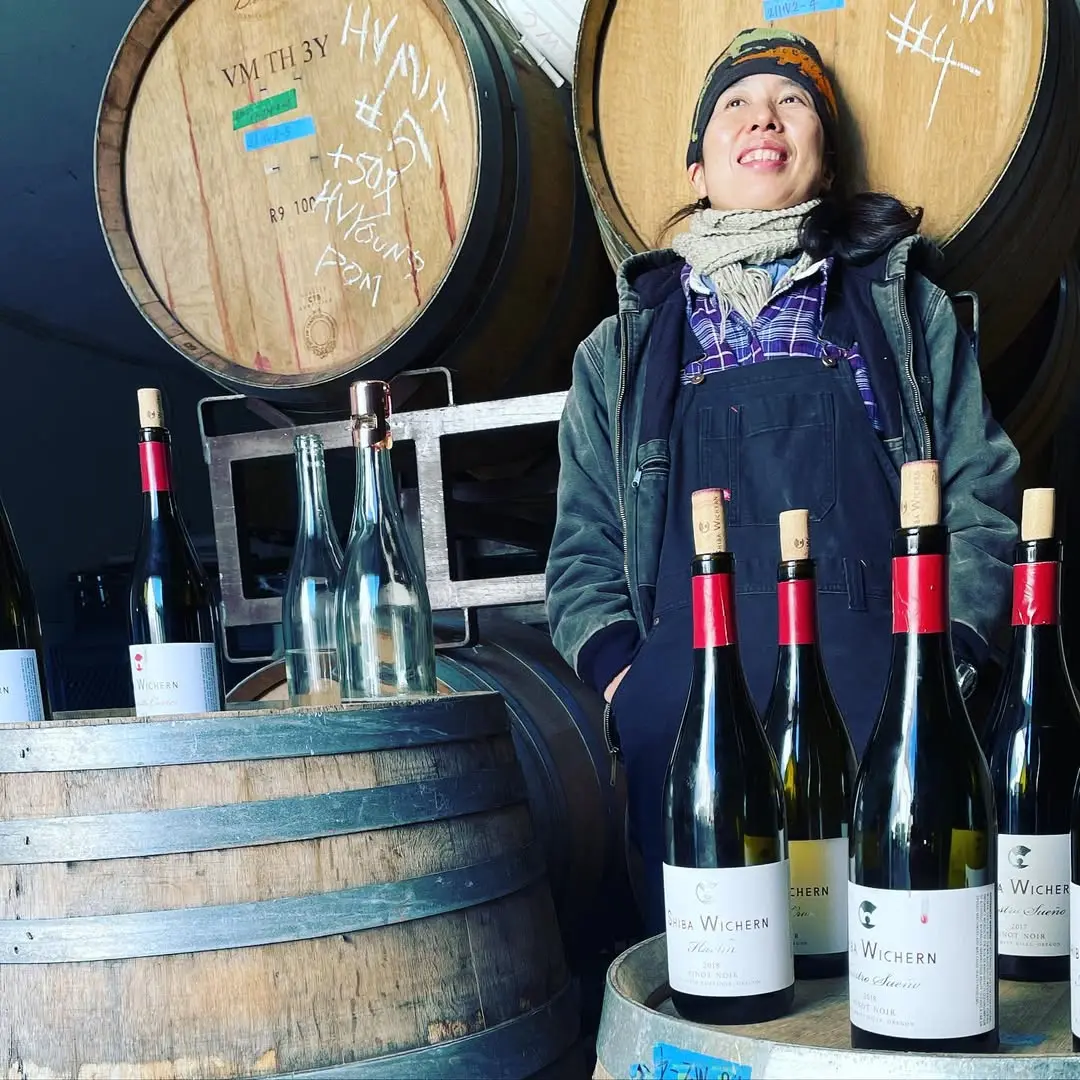
Shiba Wichern Cellars
Founded by Akiko Shiba, trained in viticulture and enology at Hochschule Geisenheim University, Germany. Own-rooted plantings, regenerative farming, no commercial yeast, no fining. From the 2025 vintage, vinifying fruit from Perkins Harter's Bracken Vineyard. The 2023 Auxerrois from Havlin Vineyard is noticeably more intense than the 2022 — the yield was very low, so it was pressed after the Pinot Noir Rosé with the remaining pomace still in the press, deepening and concentrating the wine. Worth knowing when you open a bottle.
California — Sonoma
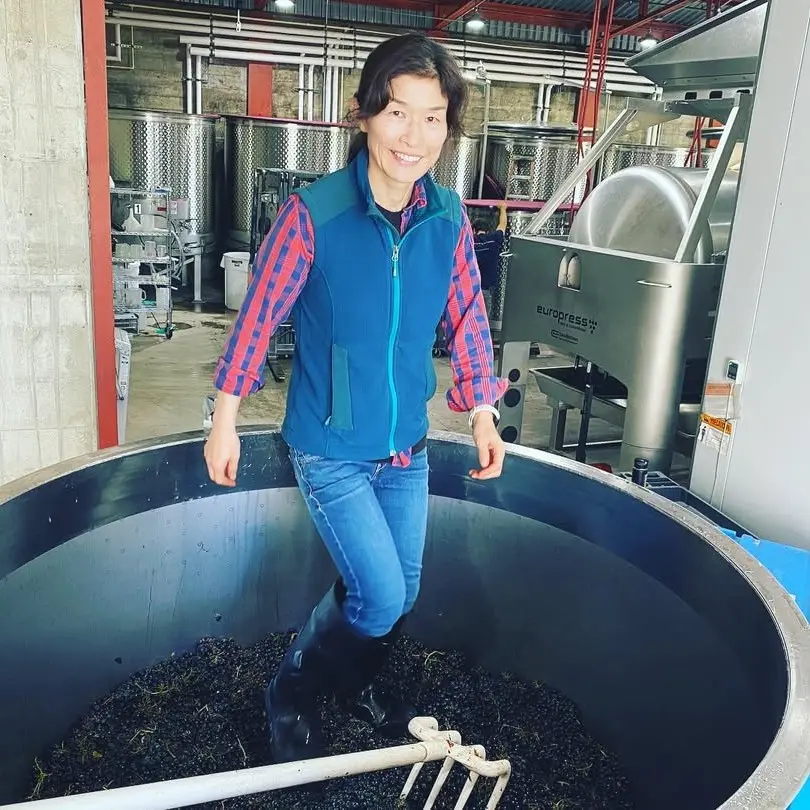
Six Cloves Wines
Founded by Sonoe Hirabayashi, a Japanese winemaker from Nagano with deep roots in fermentation — sake, miso, soy — trained at UC Davis. The philosophy is balance over extraction. The 2024 Cabernet Sauvignon is a surprise: quiet, elegant, and precise where California Cab tends toward the bold and ripe. In a mirror universe where Robert Parker had opposite taste, this could be top Bordeaux quality. Her fermentation background shows — wines built for food rather than for the tasting note.
Albi, France — Tarn
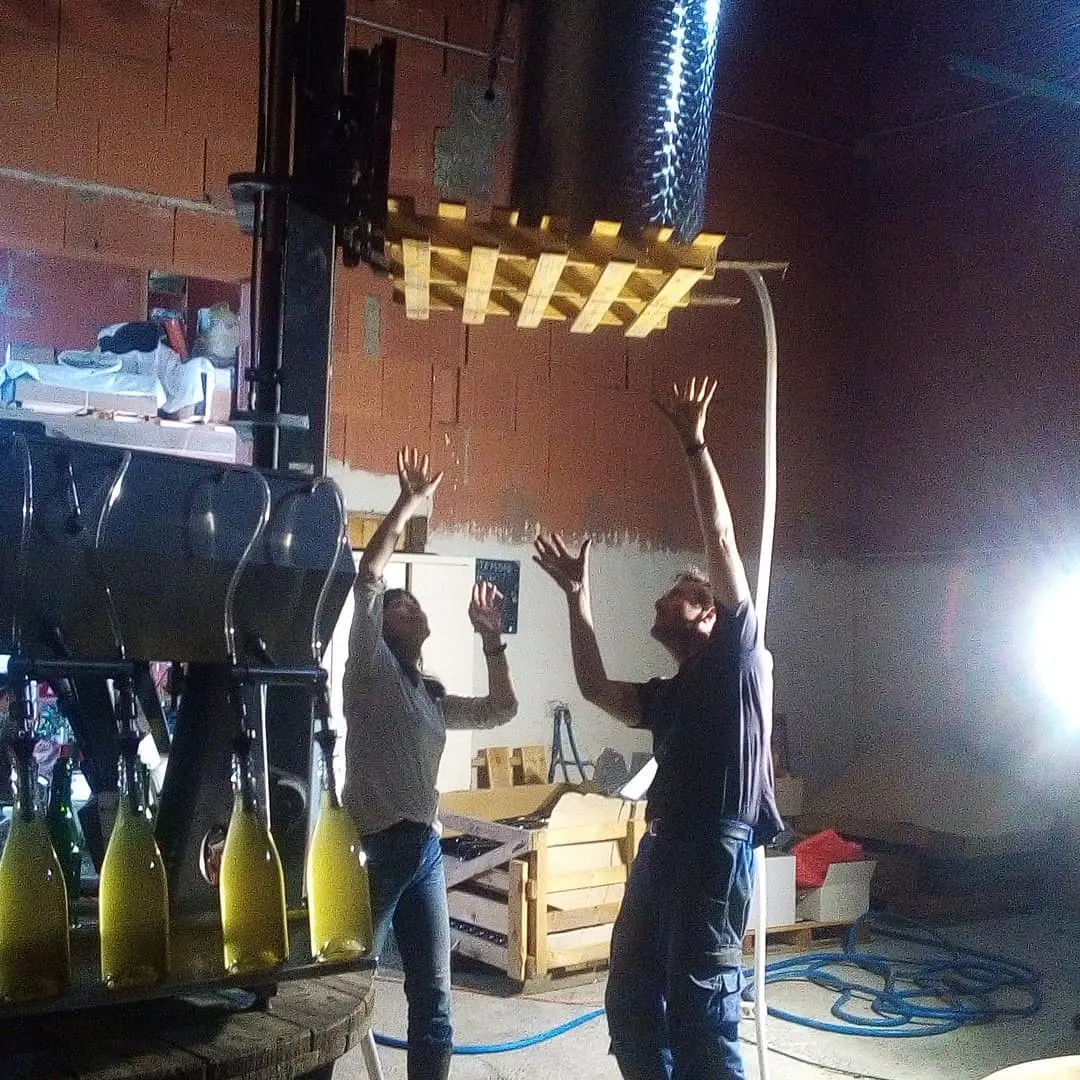
Keiko et Jérôme
A Japanese-French couple in the Tarn region, combining Japanese natural farming philosophy with French natural winemaking. No additives, no mechanical intervention. The minimal-intervention approach shares the same spirit as Ikejime — letting the material speak without interference. Their wines have the transparency that makes pairing work.
Virginia
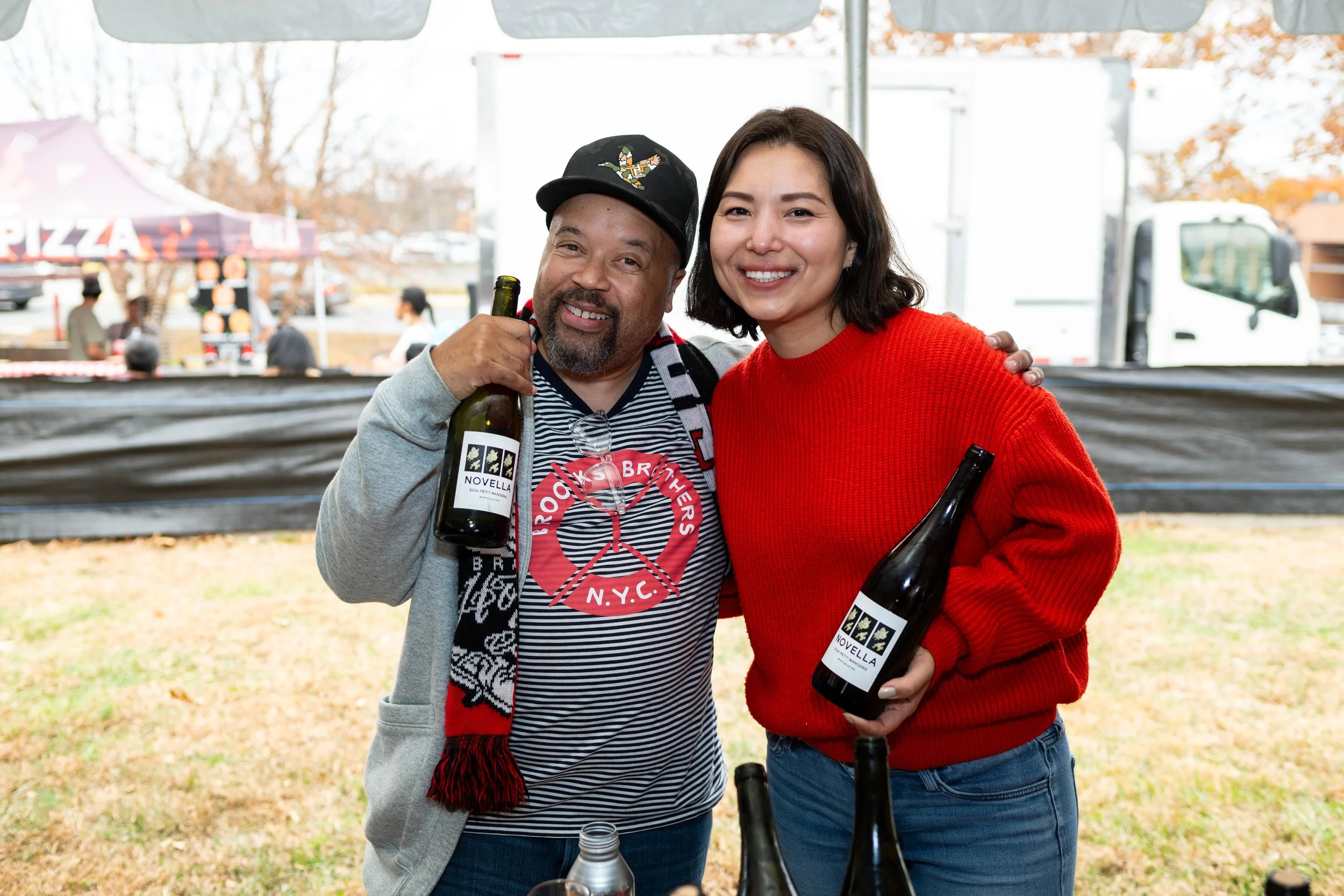
Novella Wines
Founded by Washington DC sommeliers Jennifer Dasom Anderson and Karl Kuhn after years running Michelin-starred wine programs. Jen's wines changed something for me about Virginia wine — the expectation going in was modest, but what I found was beautifully structured, calm, and deeply food-friendly. Not electric, not sharply acidic. But next to fish — especially something with a little acidity in the preparation — it made complete sense. Exactly what you want next to sushi or kimchi.
All seven partner wines are available in-store at Rice Market’s beverage section, 1608 14th St NW, Lower Level, Washington DC.
Want to taste the pairings in person? Join us for the next Fish & Wine Pairing at Rice Taste Kitchen →
Pairing by cut
What works with what
The fat content and flavor intensity of the cut should guide the pour. Richer cuts can absorb more tannin and body without being overwhelmed; leaner cuts demand more delicacy.
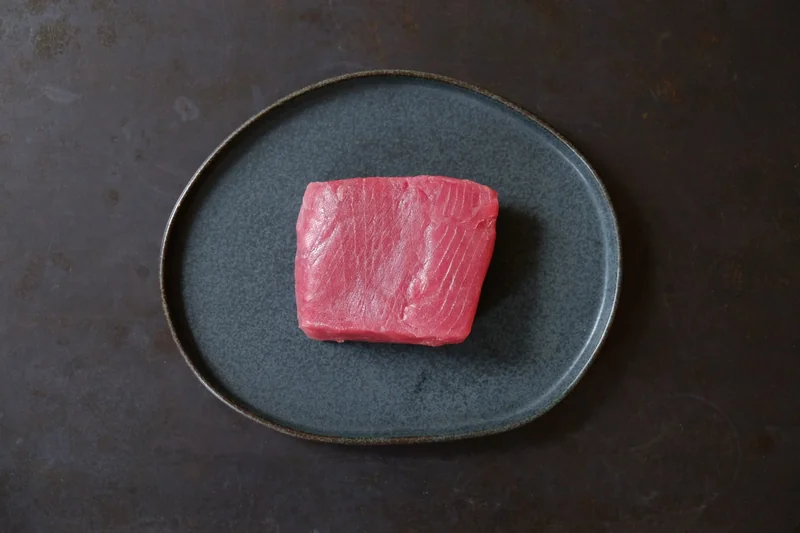
Akami — 赤身
High umami, low fat — needs a wine with good structure that can stand with the intensity. A cool-climate red with bright acidity and restraint works well. Zuke Akami (soy-marinated) is particularly good with an aged Oregon or Burgundy Pinot Noir — the umami deepens, and the wine's tertiary development meets it.
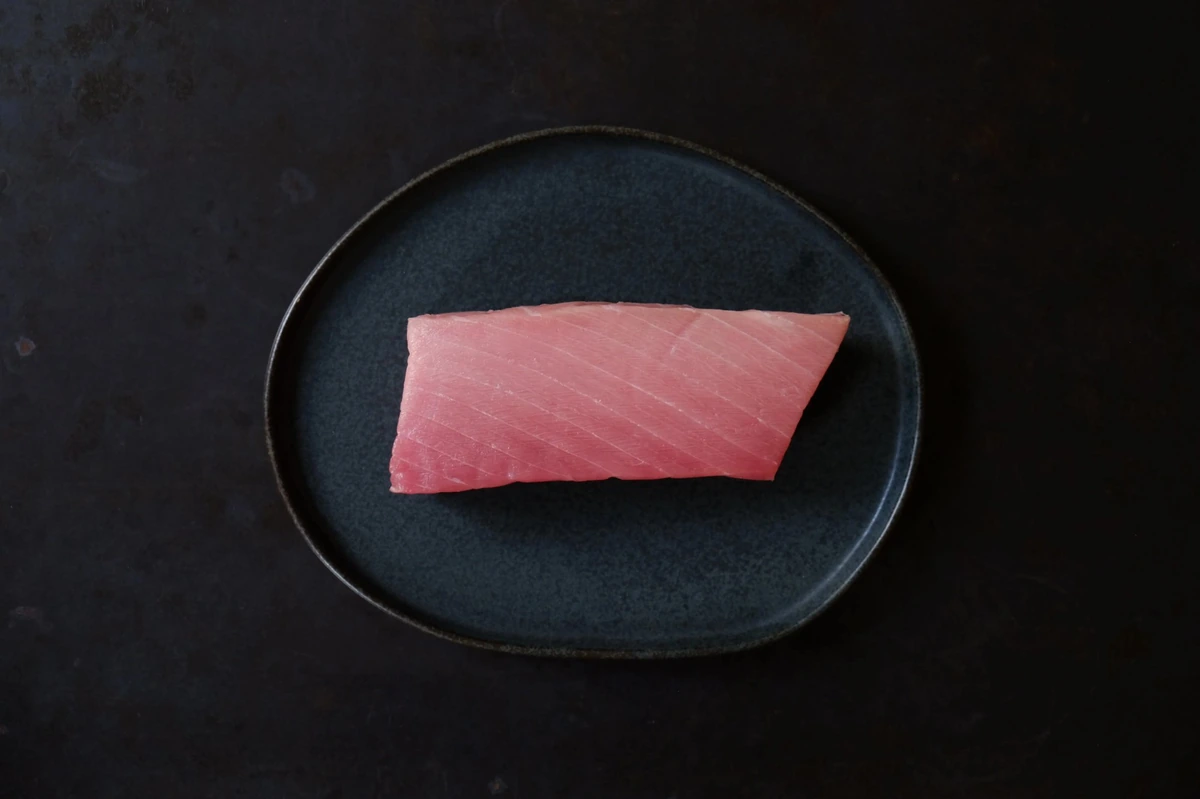
Chutoro — 中トロ
Fat and umami in balance. A red with vibrant acidity cuts through the silky fat cleanly. Serve at cellar temperature — as the glass warms, the fat coats the palate and blurs the wine's impression. Shiba Wichern or Violin Wine Pinot, decanted briefly, is a natural match.
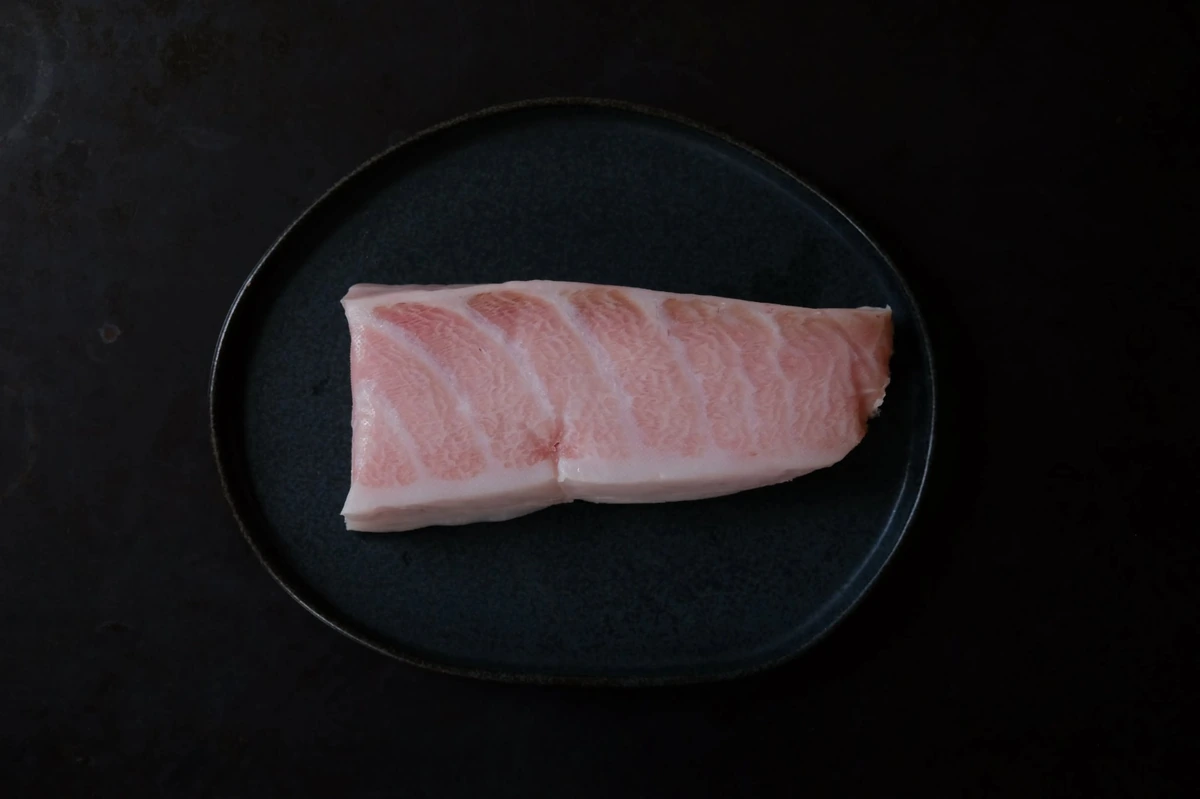
Otoro — 大トロ
The richest cut demands some power in the wine — but old-world restraint still preferred over new-world extraction. Aburi (torching) with sudachi takes the synergy with red wine to another level: the Maillard surface and the citrus acid together neutralise Fe²⁺ while the caramelised fat calls for more body. Keiko et Jérôme's Hinagiku (Syrah) is my personal choice here — old-world restraint with the depth to match the fat. Goodfellow sparkling is an excellent alternative.
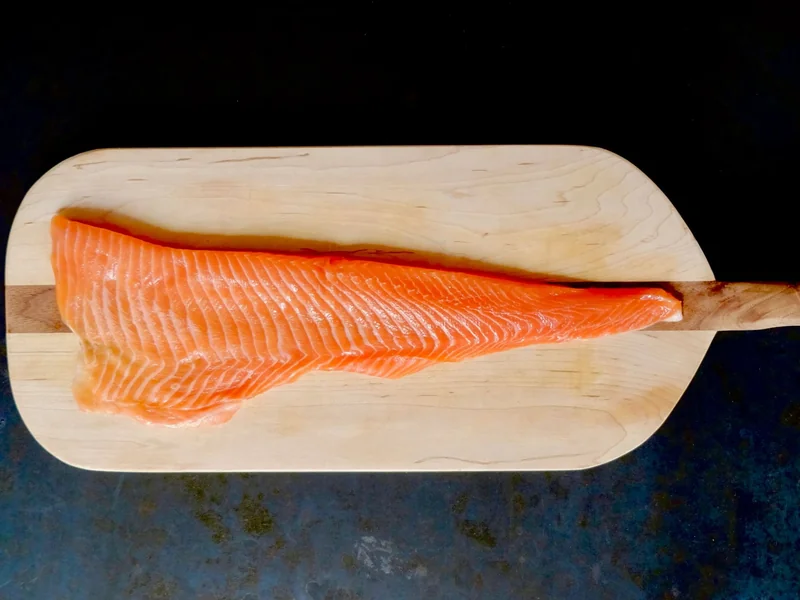
Sasshu Salmon — 薩州サーモン
Raised on Chiran tea and mineral-rich groundwater, our sashimi-grade salmon is cleaner and less fatty than most salmon. A Chardonnay with vibrant acidity is the natural choice. A rosé Pinot Noir also works well. Because Sasshu is less fatty than other salmon, a little olive oil doesn't make it heavy — it adds depth without weighing down the pairing.
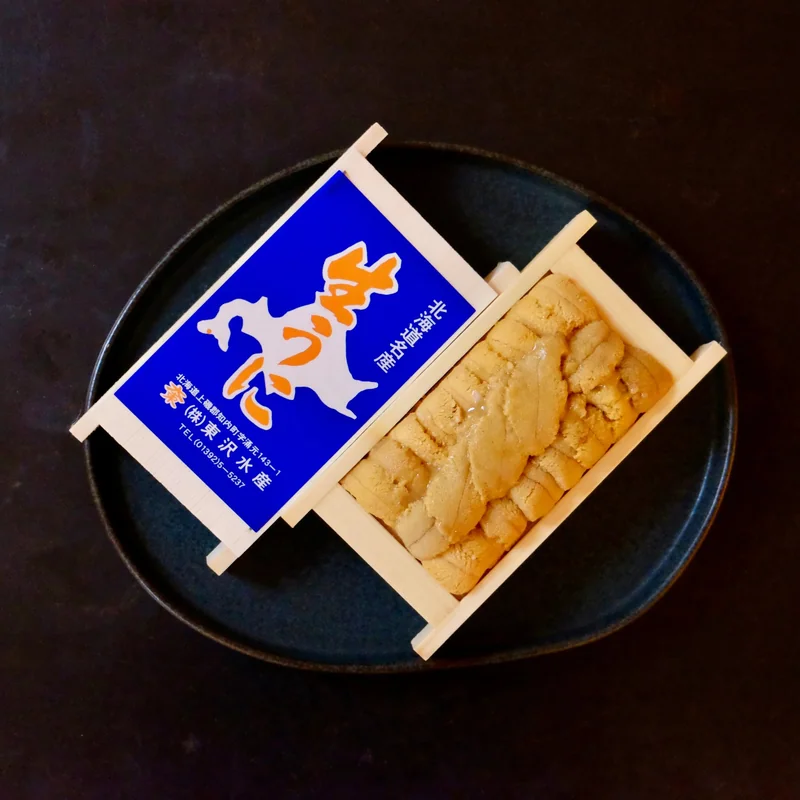
Hokkaido Uni — 北海道産ウニ
Sparkling wine, always. Bafun Uni — intense, golden, mineral — calls for a wine with great mineral presence: Goodfellow Blanc de Blancs is a precise match. Murasaki Uni — larger, more delicate, pale — and vintage Champagne bring out the best in each other; the yeast complexity and fine mousse amplify the Uni's sweetness and oceanic depth.
References
- Tamura, T., Taniguchi, K., Suzuki, Y., Okubo, T., Takata, R., & Konno, T. (2009). Iron is an essential cause of fishy aftertaste formation in wine and seafood pairing. Journal of Agricultural and Food Chemistry, 57(18), 8550–8556.
- Danilewicz, J. C. (2018). [Fe(III)]:[Fe(II)] ratio and redox status of red wines: Relation to so-called "reduction potential." American Journal of Enology and Viticulture, 69(2), 141–147.
- Gil i Cortiella, M., Ubeda, C., Covarrubias, J. I., Laurie, V. F., & Peña-Neira, Á. (2021). Chemical and physical implications of the use of alternative vessels to oak barrels during the production of white wines. Molecules, 26(3), 554.
- Fujita, A., Isogai, A., Endo, M., Utsunomiya, H., Nakano, S., & Iwata, H. (2010). Effects of sulfur dioxide on formation of fishy off-odor and undesirable taste in wine consumed with seafood. Journal of Agricultural and Food Chemistry, 58(7), 4414–4420.
- Schmidt, C. V., Olsen, K., & Mouritsen, O. G. (2021). Umami potential of fermented beverages: Sake, wine, champagne, and beer. Food Chemistry, 338, 128094.
- Nakamura, T., Hagura, Y., Fujita, K., & Fushiki, T. (2017). Comprehensive palatability of sake paired with dishes: Reward, culture, information subdomains. Food Quality and Preference.
- Žižka, E., & Zelený, J. (2022). Possibilities of wine and fish dishes pairing. Journal of Culinary Science & Technology.
- Franceschi, D., Lomolino, G., Sato, R., Vincenzi, S., & De Iseppi, A. (2023). Umami in wine: Impact of glutamate concentration and contact with lees on the sensory profile of Italian white wines. Beverages, 9(2), 52.