What makes Hokkaido Uni different
Uni quality is determined almost entirely by water temperature, diet, and handling. Hokkaido — Japan's northernmost main island — sits at the intersection of the cold Oyashio current from the north and the warmer Tsugaru current. The resulting cold, nutrient-rich waters produce sea urchin with exceptional sweetness, clean oceanic flavor, and the characteristic creaminess that defines world-class uni.
Uni’s flavor is built almost entirely from free amino acids — glycine and alanine for sweetness, glutamic acid for umami, and methionine, a sulfur-containing amino acid present in small amounts that gives uni its characteristic oceanic identity (Takagi et al., 2020). It’s what separates uni from other sweet shellfish like scallop: the methionine signature.
Most uni served in the US — including at Japanese restaurants — is treated with alum (ミョウバン) to firm the texture and extend shelf life. Alum introduces the bitterness that many people associate with uni and assume is natural to the ingredient. It is not. Sashimi DC's Hokkaido Uni is not treated with alum, or treated with only minimal alum — close enough to none that there is no bitterness.
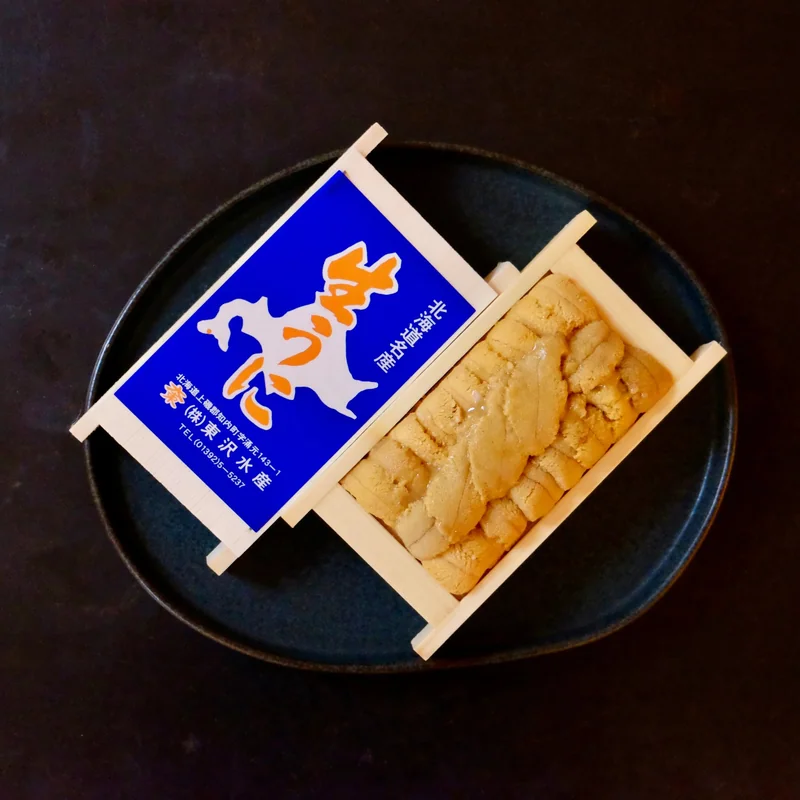
Alum works by cross-linking proteins in the gonad tissue, firming the lobes and slowing breakdown — useful for shelf life, but the tradeoff is persistent bitterness and astringency that suppress uni's natural sweetness. The premium format in Japan is 塩水ウニ (saltwater-packed uni): packed in seawater at near-natural salinity, no alum, and sold within roughly 48 hours. It has a shorter window than alum-treated uni, but the flavor is unmasked — the sweetness and ocean character come through fully.
The bitterness you may remember from uni is not what uni tastes like. It is what alum tastes like. Hokkaido Uni from Sashimi DC is not treated with alum, or treated with minimal alum.
How to eat uni
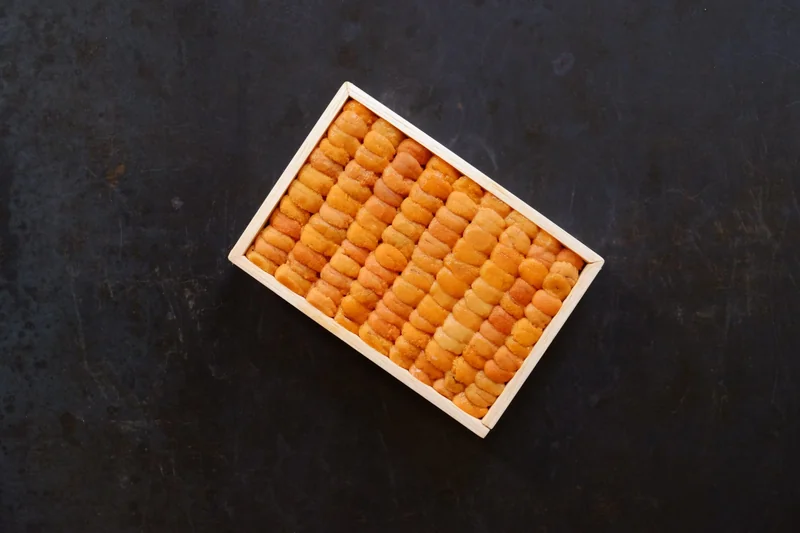
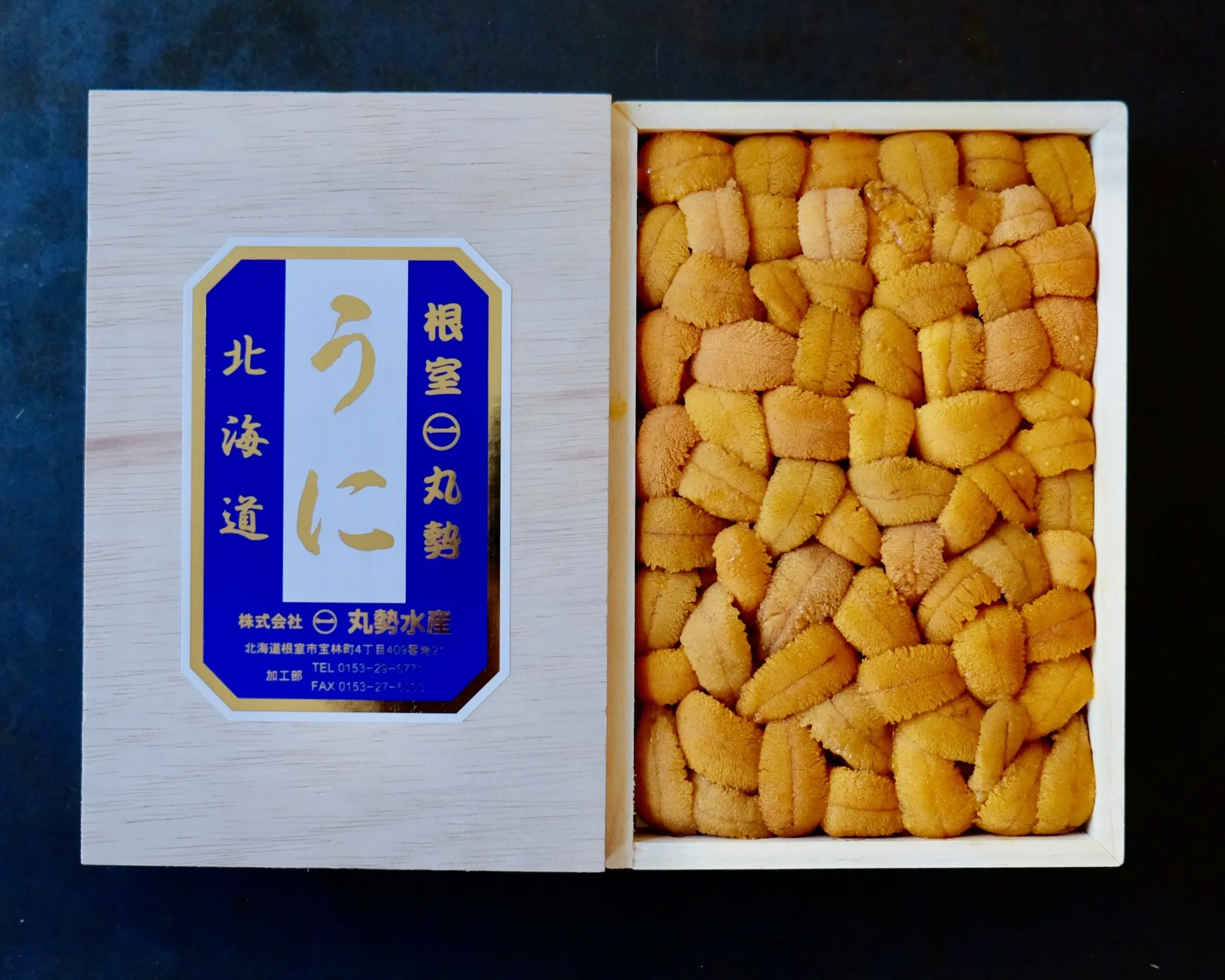
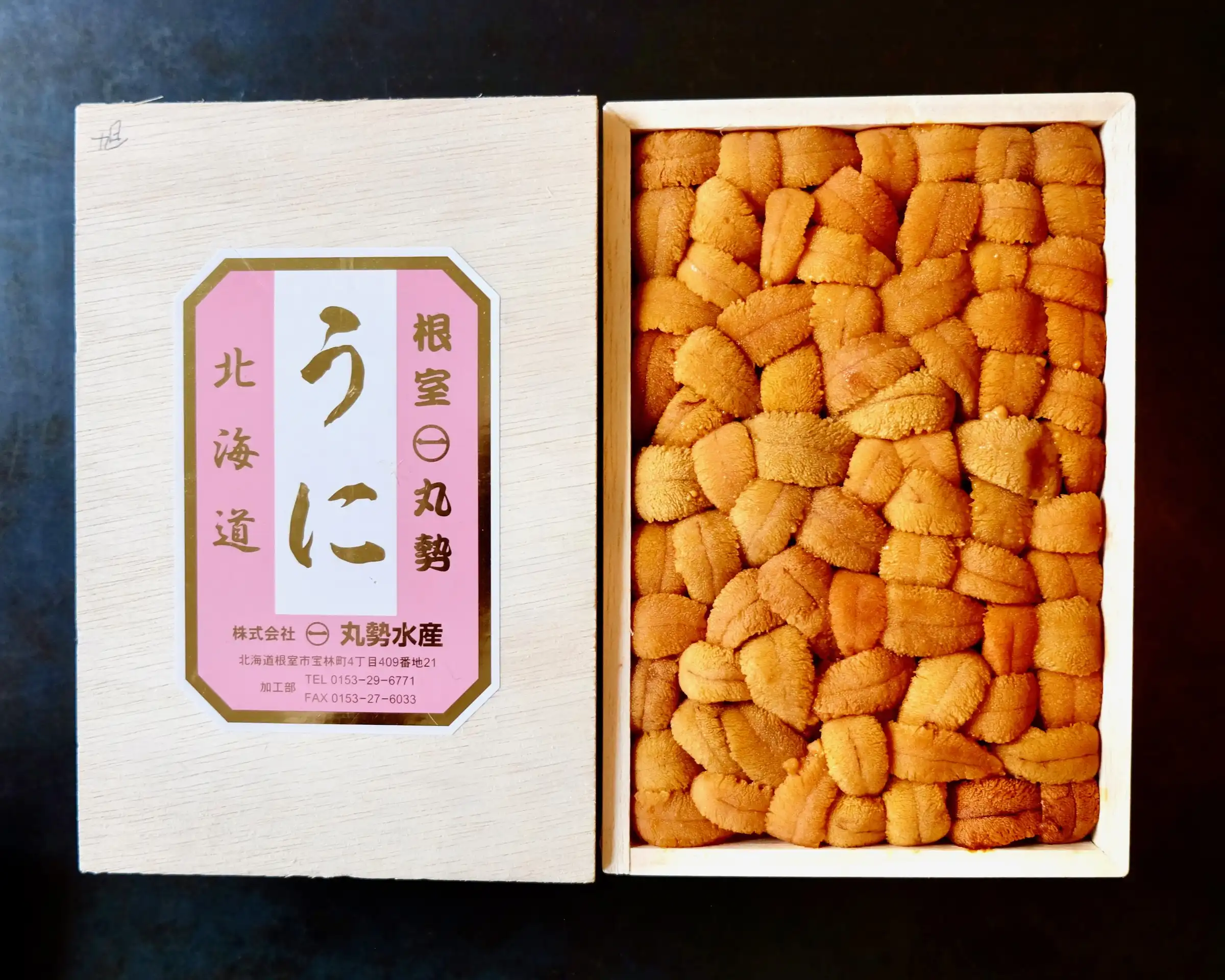
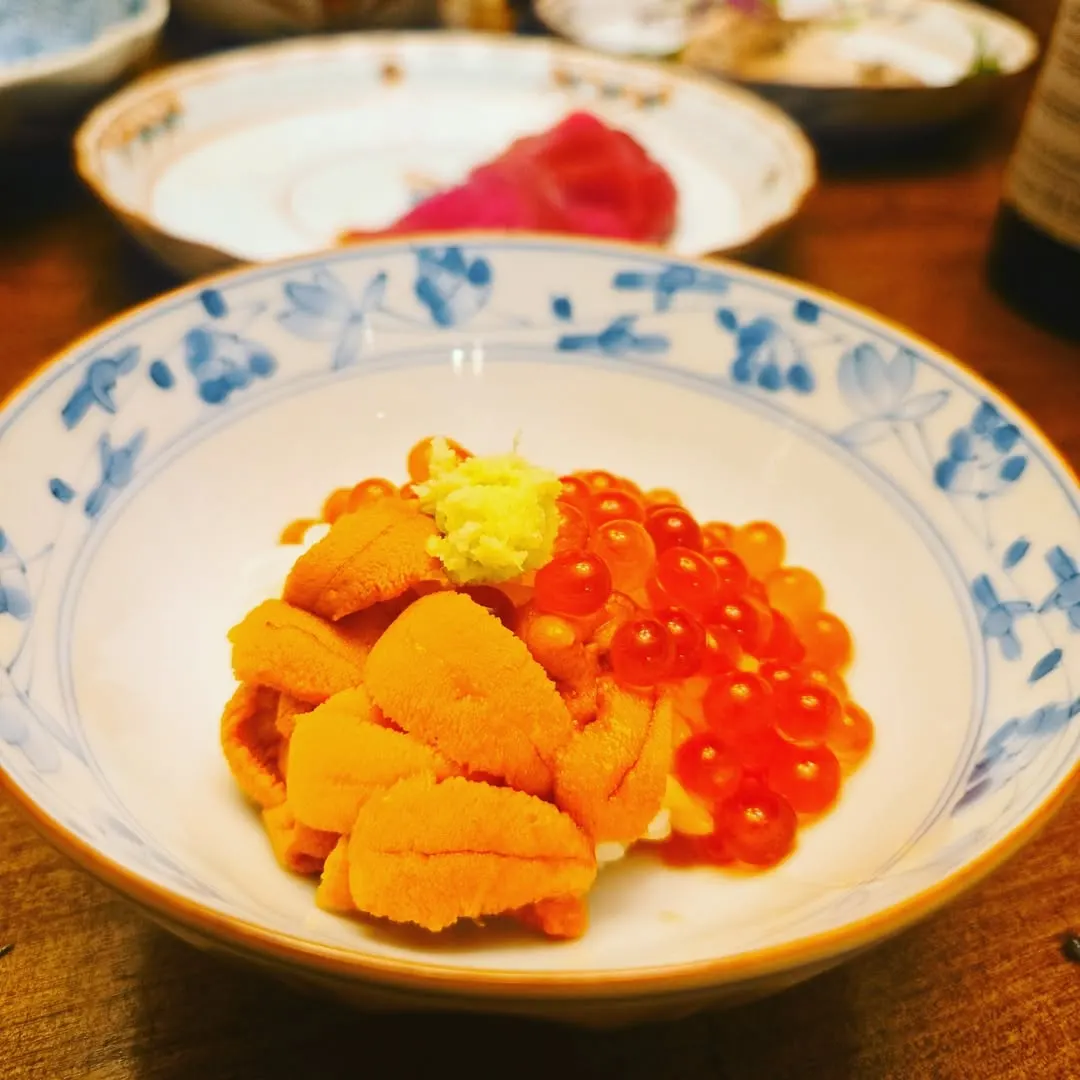
Uni is best eaten simply. On a small amount of warm sushi rice — the rice should be at body temperature, not cold, so that the fat in the uni softens slightly on contact. A small touch of wasabi placed directly on the uni before eating. No soy sauce needed for good uni; if you must use it, dip lightly. The part we eat is the gonad — the reproductive organ — not roe. Both male and female gonads are sold as uni; male tends to be deeper orange and firmer, female lighter yellow and creamier.
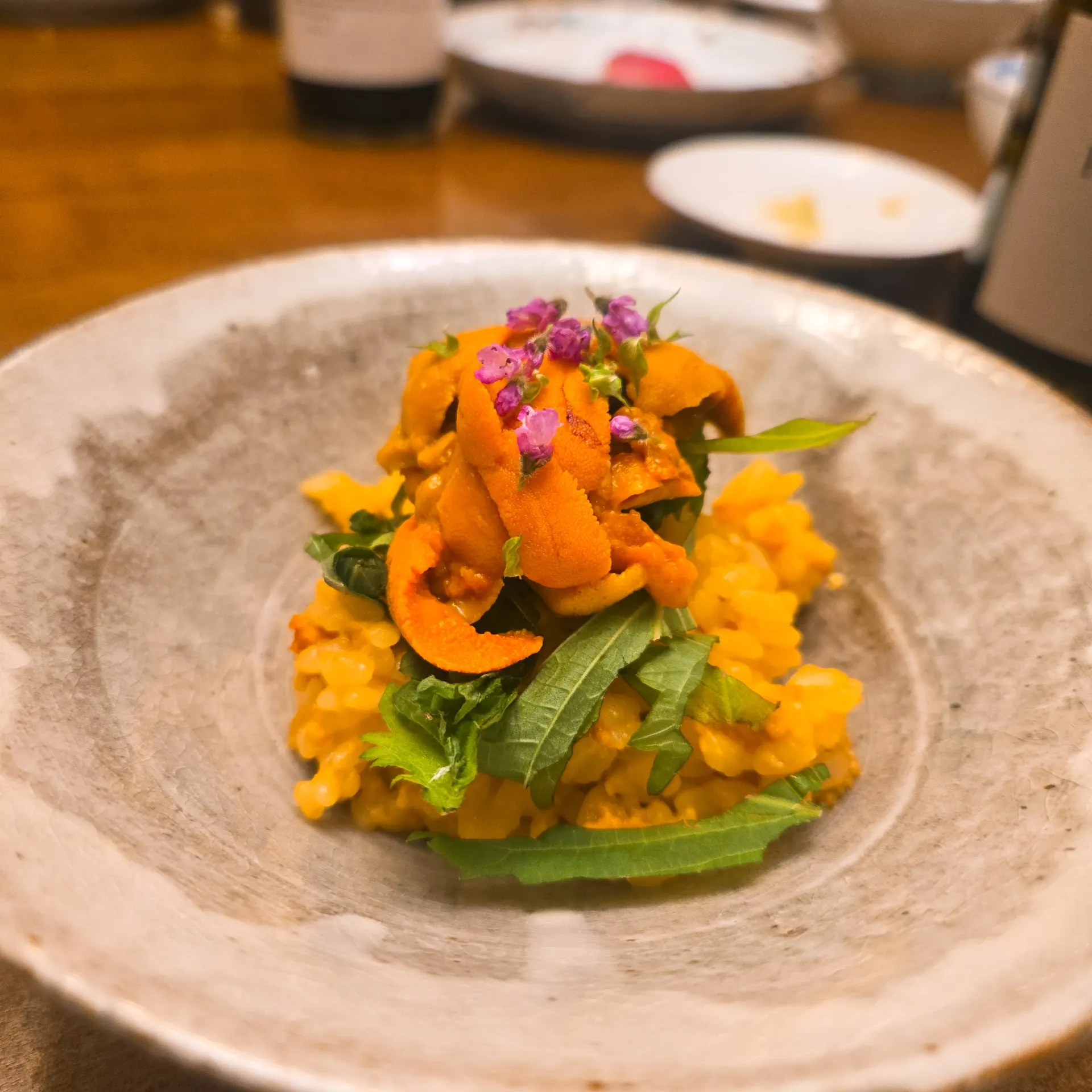
Uni also works as a finishing element on pasta, on scrambled eggs, as a sauce component, or eaten directly from the tray with a small spoon. The one thing that diminishes it in every application is heat — uni should never be cooked. It goes on hot food at the last second, after the heat source is removed.
Seasonal availability
Uni availability shifts by season and by fishing conditions in Hokkaido. Ezo Bafun Uni peaks in summer from Rishiri, Rebun, and the Shakotan peninsula — the most celebrated fishing grounds in Japan — but is harvested somewhere in Hokkaido in every month of the year, including Hakodate in autumn, Hidaka (Shizunai–Erimo) in late winter, and the Northern Territories through spring. Kita Murasaki Uni peaks in spring and autumn, with the Hakodate region also producing excellent Murasaki in winter. We carry whichever variety is at its seasonal best — sometimes both simultaneously, sometimes one or the other. Availability is posted weekly in the shop and on our updates page.
Uni sells out quickly. If you want it, order early in the day or check with us before making the trip.
Cooking for a private household? Premium-grade uni beyond our regular case can be sourced for private and family chefs on request — see our private chef page.
Cold chain — and vibration
Uni is unusually sensitive — not just to temperature, but to physical disturbance. Vibration during transport can damage the delicate lobes, causing them to break apart and lose their structure before they reach you. A piece of uni that has been shaken excessively on the way to your table looks different, feels different, and tastes different from one that arrived intact.
Ground courier services — FedEx, UPS overnight — have a vibration profile that damages uni lobes before they arrive. This is why we don't ship uni by standard courier and why we handle the DC delivery leg ourselves. Hokkaido uni routes through Toyosu Market, where handlers know how to move it without damage; the care continues on the air leg and through our own delivery. Packaging for the last mile is designed specifically to minimize movement.
Certified by Japan’s MAFF
Sashimi DC is certified as a Japanese Food and Ingredient Supporter Store by Japan's Ministry of Agriculture, Forestry and Fisheries (MAFF), administered by JETRO (Certification ID: J000-001-410, valid through May 2028). One of three certified establishments in Washington DC, including Sushi Taro and DC Sake Co (see the embassy’s list of certified businesses), and the only certified fish retail counter in the city.
Sources
- Takagi, S., Sato, Y., Murata, Y., Kokubun, A., Touhata, K., Ishida, N., & Agatsuma, Y. (2020). Quantification of the Flavor and Taste of Gonads from the Sea Urchin Mesocentrotus nudus Using GC–MS and a Taste-Sensing System. Sensors, 20(24), 7008. https://doi.org/10.3390/s20247008 — GC-MS and taste-sensing analysis identifying the free amino acids behind uni's flavor: glycine and alanine for sweetness, glutamic acid for umami.
- Murata, Y., Yoshimura, H., & Unuma, T. (2020). Compositions of extractive components in the testes and ovaries of various sea urchins: Comparisons among species, sexes, and maturational status. Fisheries Science, 86, 203–213. https://doi.org/10.1007/s12562-019-01388-y — Direct comparison of male (testes) and female (ovary) gonad extractive compounds — the biochemical basis for the male/female sensory difference and the amino-acid rise toward spawning.