What sashimi fish is available in Washington DC this week?
As of June 17, 2026: Bluefin Tuna (Goto Islands, never frozen, ikejime), Hokkaido Bafun Uni, Kinmedai (Splendid Alfonsino), and Saba (Mackerel). Fresh Wasabi and Shiso also in. Sashimi DC at 1608 14th St NW — pickup daily 11:30 am–8 pm, same-day delivery across DC, Maryland, and Northern Virginia.
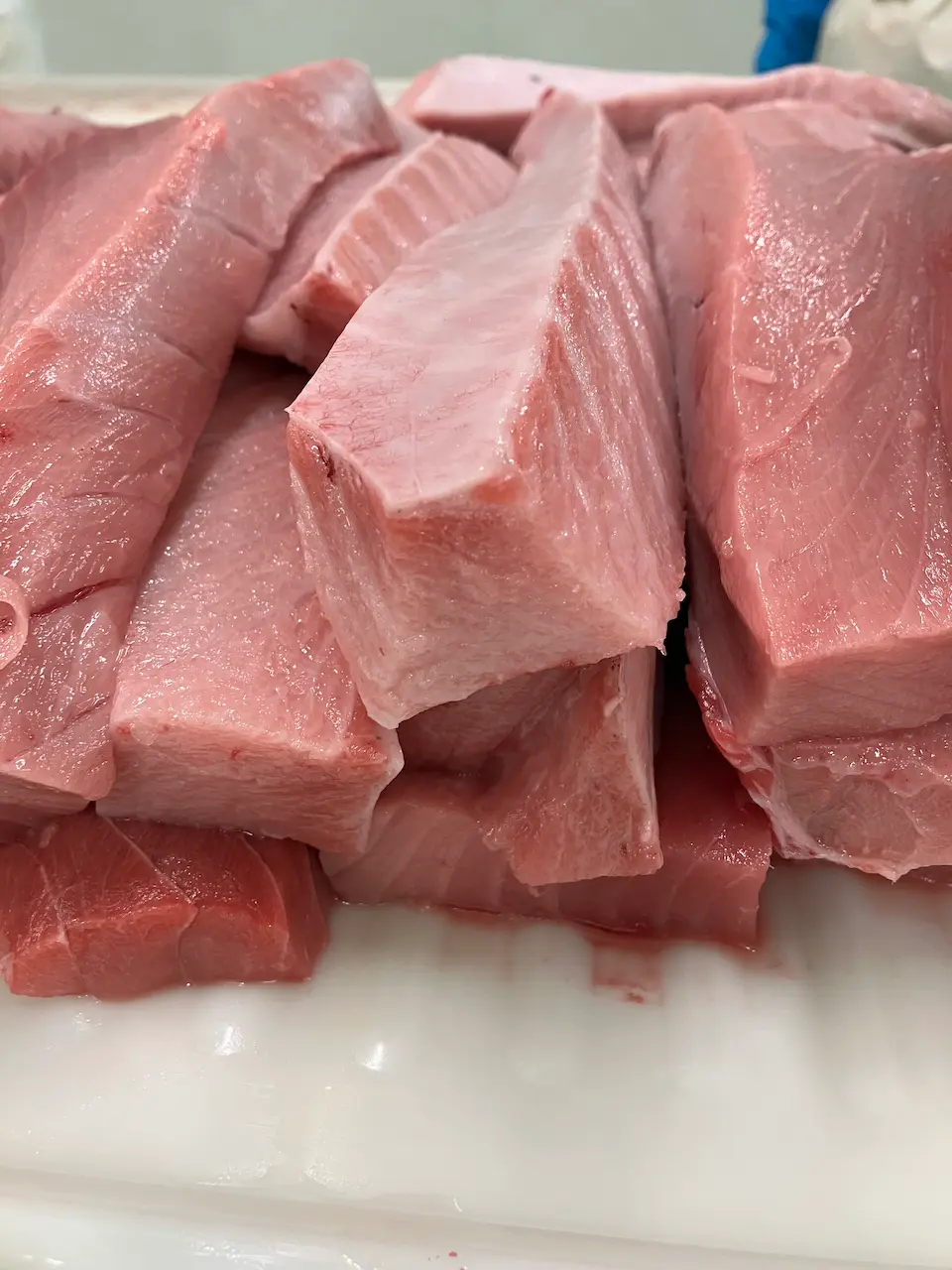
Smaller Bluefin This Week — More Chutoro, Less Otoro
Water temperatures in the Goto Islands are climbing toward summer. As they rise, we intentionally source smaller Bluefin Tuna — not larger ones. The reason is Hiyashikomi (冷やし込み), the post-harvest icing protocol that is critical to maintaining cold chain quality from the moment the fish is harvested. Smaller fish cool to core temperature faster. In summer heat, that matters more than size.
The trade-off is fat distribution. Smaller fish carry less Otoro — the deep belly fat that accumulates most in mature, heavier fish. What they do carry is abundant Chutoro, the medium-fatty cut that many people find the most balanced eating experience anyway. This week: Chutoro is in good supply. Otoro is limited.
The akami character this time of year: bright, lifted acidity — a clean, precise flavor profile distinct from the dense layered umami of winter fish.
Murasaki Uni — Small Boxes In
Small boxes of Murasaki Uni (Hokkaido Uni) arrived this week. Murasaki tends toward a milder, more delicate sweetness than Bafun — slightly lower brine, slightly lighter on the palate. Quantities are limited; these go quickly. Order early in the week if you want them.
Knife Sharpening Class — Saturday June 13
The Knife Sharpening and Fish Slicing Class was fully booked last time. We're running it again this Saturday, June 13. Bring your kitchen knife — we sharpen it together on Japanese whetstones, then put it straight to work slicing sashimi-grade fish. You leave with a sharp knife, hands-on technique, and fish to take home.
Note: the class is on Saturday. We'd normally consider Sunday as well, but there's a major event in town that day with tight security — not the ideal time to be carrying a knife through the city.
At Rice Market This Week
Rice Market receives its weekly shipments on Wednesdays, same day as fish. Two things worth noting this week: Boston Natto is back in stock, and Premium Gochujang from Aya's Culture has been added to the grocery inventory — a Korean fermented chili paste made the traditional way, worth trying.
On Ikejime
A question that comes up often: what actually makes ikejime-processed fish taste different? We now have a dedicated page on ikejime that walks through the full science — the ATP cascade that produces IMP (umami), the role of stress and lactic acid, how spinal cord destruction preserves the quality window, and why the difference is measurable in days of peak flavor.
The short version: a conventionally handled fish arrives at death having already consumed much of its ATP through thrashing and stress. An ikejime fish arrives with its ATP intact. That preserved ATP drives a higher, longer IMP peak — the compound responsible for the savory depth in great sashimi. Every Bluefin Tuna and Sasshu Salmon at Sashimi DC is ikejime-processed dockside by the producer, within minutes of harvest.
Mark Your Calendar — June 24
Shelby Perkins from Perkins Harter (Eola-Amity Hills, Oregon) is visiting DC, and we're hosting a wine tasting event on Wednesday, June 24. Jen Breaux from Novella Wines (Virginia) will likely be joining as well. Wine-centric, with fish from the counter. Details and tickets to follow — save the date.