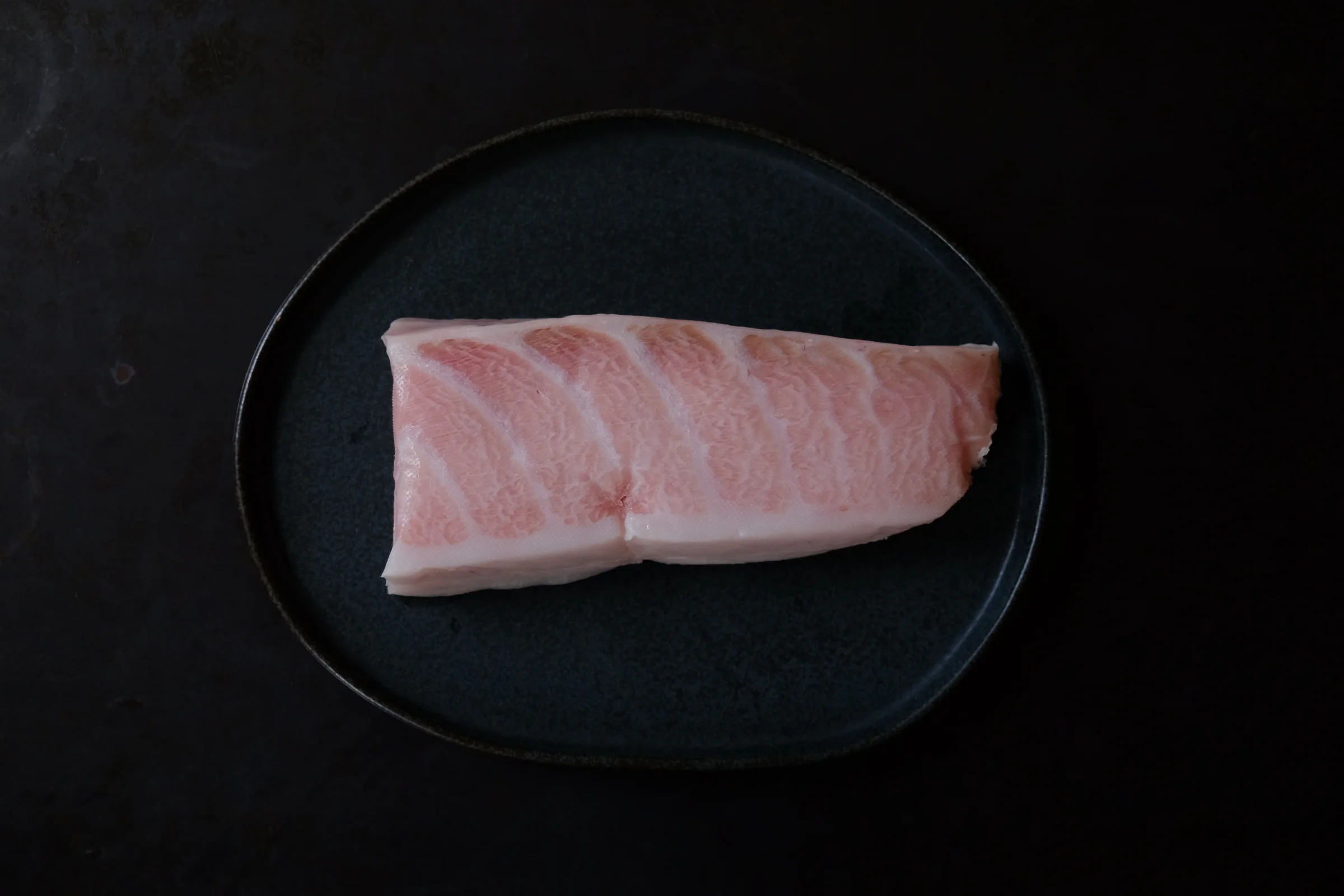
Bluefin Tuna: The "Nettori" Texture Explained
What is the texture of good bluefin tuna in winter?
Premium winter bluefin tuna has a "nettori" (ねっとり) texture — a rich, buttery melt that coats the palate rather than breaking apart cleanly. It comes from intramuscular fat built up as the fish stores energy against cold water. Sashimi DC's Goto Islands bluefin peaks in January–February, when nettori texture is most pronounced in Otoro and Chutoro.
Our premium Bluefin Tuna from Goto, Nagasaki, continues to impress. A customer who purchased our Bluefin yesterday specifically messaged us to highlight the "ねっとり" (Nettori) texture of the sashimi — which is indeed proof of its high quality.
This "Nettori" texture is what we referred to last week as "Nebari" — a characteristic found only in truly high-quality Bluefin, indicating exceptional richness and depth in the fat. It is a subtle stickiness and depth that you feel on the tongue, distinct from simple fattiness.
While Bluefin Tuna is traditionally at its absolute peak in the coldest winter months (December–February), the quality is significantly improving as we head into the colder season: * Otoro: Magnificent marbling and Nebari * Chutoro: Velvety texture * Akami: Rich, profound taste
I personally sampled each cut this past week and found the difference utterly astonishing.
Alaskan Ikura Shoyuzuke: Adjusted for Perfection
We received feedback that last week's batch was a touch salty. We have adjusted our recipe, and this week's Ikura Shoyuzuke is perfectly balanced — richer and less salty.
Upcoming: DIY Yuzu Kosho Class
We anticipate having fresh yellow Yuzu available in a couple of weeks. We are planning a fun DIY Yuzu Kosho making class — stay tuned for dates and registration.