01
The fish is better.
Genuinely better.
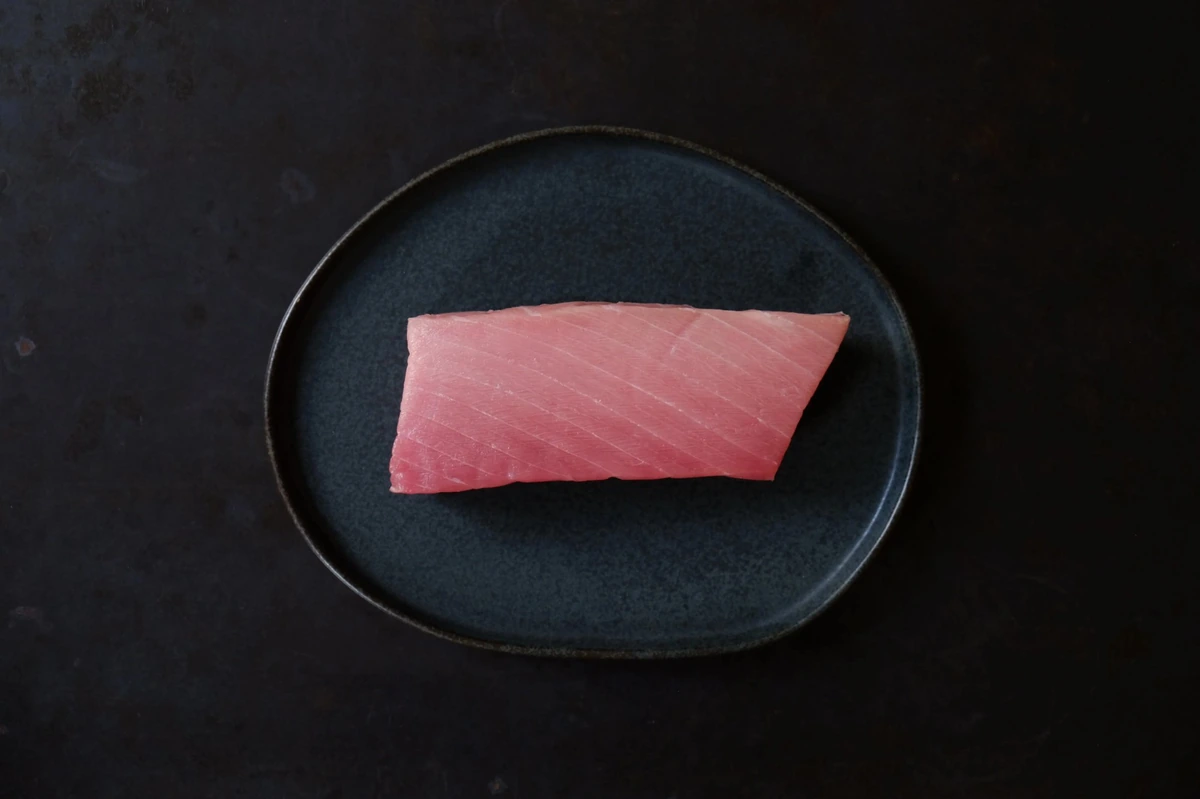
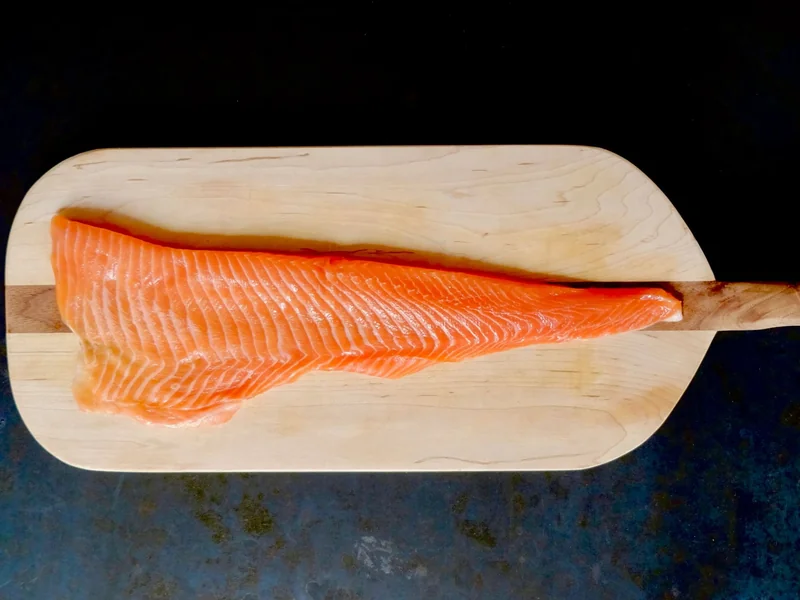
Washington DC has good sushi restaurants. None of them source Ikejime-processed Bluefin Tuna direct from the farm in Goto, Nagasaki — Hosei Suisan, two-time winner of Nagasaki Prefecture's top prize for farmed Bluefin, the top producing prefecture in Japan. None of them carry Sasshu Salmon, raised on Chiran tea and Kagoshima mineral groundwater, available nowhere else outside Japan. None of them have a direct air freight agreement routing Fukuoka → Haneda → Dulles, landing fish at IAD within approximately 48 hours of leaving Miyazaki.
A restaurant receives fish, holds it in a sushi case for days, and serves it at an unknown age. Your fish is available the day it clears customs. The gap in freshness is not marginal.
"Batsugun. Absolutely outstanding — the quality of this fish is on a level I have not seen outside Japan."
An embassy chef with deep professional knowledge of Japanese fish, Washington DC"I dined at DC's two-Michelin-star restaurant and saw the same Uni box as your Valentine's special presented at their chef's counter. Next time, I'm buying it from you."
A regular Sashimi DC customerIkejime processing (how it works) — instantaneous neural death, immediate bleeding and spinal cord destruction, body cavity iced within minutes of harvest. Preserves ATP that converts to IMP, the primary umami compound, rather than degrading to lactic acid. The result is firmer texture, deeper flavor, and significantly longer shelf life than conventionally harvested fish. Every piece of Bluefin at Sashimi DC is processed this way at the Goto Islands farm.
02
The economics are
not close.
A premium omakase dinner for two in Washington DC often starts at $200 per person before you touch a drink. Add sake, tax, and tip — you are at $700. For that money you are paying for rent, labor, a reservation system, and four or five margin layers stacked between the fish farm and your plate — exporter, importer, distributor, restaurant. You are not paying for better fish. You are paying for the chain.
Home sushi with premium ingredients — Chutoro, Sasshu Salmon, a Home Sushi Kit that lasts multiple meals, and a bottle of sake at retail — costs around $224 for two. No tax on the fish. No tax on the wine you bring from home. No markup. No tip.
Home sushi
Dinner for two
Restaurant omakase
Dinner for two
You save approximately
$477.90 per dinnerWith better fish, better sake, and no one telling you when to leave.
One 8 oz Akami saku block ($55) yields approximately 15 nigiri slices at home — under $4 per piece, vs. typically $7–$12 per nigiri at a DC sushi counter before tax and tip. The same Goto Islands Bluefin Tuna, made to order in your kitchen.
The Home Sushi Kit ($50) covers multiple meals — rice, Sushizu, Shoyu, wasabi, and Nori. The per-dinner cost drops further every time you use it.
03
Every piece is documented.
Every step proven.
At a sushi counter, you can ask where the fish came from. You will get an answer. There is no way to verify it. A typical US seafood import passes through an exporter, an importer, a distributor, and the restaurant itself — five or six layers, each adding time, handling, opacity, and margin.
Sashimi DC's supply chain has just 2 layers — the Miyazaki processor, then Sashimi DC itself. Here's the physical journey:
Goto, Nagasaki
Miyazaki
Fukuoka → Haneda → IAD
Washington DC
Every shipment enters the US cleared by US Customs and the FDA — and Bluefin Tuna, the fish Sashimi DC carries under NOAA's Seafood Import Monitoring Program, arrives with full catch certificates, documented at every transfer. Nothing is informal. Nothing is undocumented. The fish you buy at Sashimi DC is the same fish that cleared the paperwork. That is not something a restaurant can say.
NOAA SIMP (Seafood Import Monitoring Program) requires full traceability for imported seafood of covered species, including Bluefin Tuna — harvest source and chain of custody documented from catch to consumer. Bluefin Tuna is the fish Sashimi DC carries under SIMP, and every shipment meets this standard. Zero tolerance for undocumented catch.
04
Fresher than the restaurant.
By days.
Sashimi DC's Bluefin Tuna is Ikejime-processed at Hosei Suisan's farm in the Goto Islands, air-shipped via Fukuoka and Haneda, collected by Keita at Dulles within approximately 48 hours of leaving Miyazaki, and on the shop counter the same day. You can take it home that day.
A restaurant places orders ahead of the week, receives fish in bulk, and holds it in a temperature-controlled sushi case — typically serving it over multiple days. There is no mechanism in a restaurant environment to serve you fish on the day it arrives from Japan.
There is also the rice. Shari — properly seasoned sushi rice — should be eaten within minutes of being made, at near-body temperature. It stiffens and loses its texture within an hour. Restaurant rice is made in bulk and held in a warming container for hours. Home sushi rice is made by you, eaten immediately. That is the only way it is meant to be eaten.
05
Your table, your rules.
Your love.
Upscale sushi restaurants in Washington DC are adult environments. The counter is quiet; the pacing is the chef's. Small children are not welcome — or not comfortable — at most omakase counters. Home sushi is the opposite. The meal happens at your speed, with your family, for as long as you want. There is no bill arriving while you are still eating. No one needs a reservation.
Temaki — hand rolls — are the ideal format for home: easy to assemble, eaten immediately, and genuinely fun to make together. A child who has rolled their own Temaki and eaten their own fish will have a different relationship with Japanese food for the rest of their life. That is not available at a restaurant counter.
Open the bottle of wine or sake you actually want, at the price you actually paid. Not what the restaurant charges — which is three to four times retail for the same bottle.
And then there is something a restaurant simply cannot replicate. A customer once came in and bought Bluefin Tuna to make sushi for his girlfriend on her birthday. He made the rice, prepared the fish, and served it to her at their table. That is not a restaurant experience — that is a gesture. The attention, the effort, the care in choosing the best possible ingredients and making something with your own hands for someone you love. Money cannot buy that. A reservation cannot buy that. It is available to anyone willing to try.
Japanese culture has a word for the devotion a craftsman puts into their work — shokunin spirit. You do not need to be a professional to bring that spirit to a meal. Making sushi for the people you love, with the best fish available in Washington DC, is its own form of it.
No dress code
Sushi in your kitchen at midnight with leftover Chutoro is among the finest meals available in Washington DC.
For the people you love
A birthday sushi dinner you made yourself. A family meal that takes 30 minutes of focused care. A gesture that no restaurant can replicate — and no money can buy.
Drink what you want
Retail sake. A wine from your cellar. Whatever pairs best with the fish — at the price you paid for it, not the price a restaurant charges.
Your pace
No pacing. No courses timed by the kitchen. No table turned. The meal ends when you decide it does.
06
It is not difficult.
One session is enough.
The technique for Temaki — hand rolls — can be learned in a single session. The Sashimi DC Make Sushi at Home guide covers Shari (rice preparation), slicing technique, and Temaki assembly with video guidance. The Home Sushi Kit ($50) contains everything you need: premium short-grain Japanese rice, Sushizu seasoned rice vinegar, organic Shoyu, wasabi, and Nori.
You do not need a knife set, a sushi mat, or professional training. You need good rice, good fish, and about 30 minutes. Everything else is improvable over time.
Is raw fish at home safe? "Sashimi-grade" is a handling standard, not a legal grade, so ask your seller how the fish was raised, processed, and kept cold. Sashimi DC's Bluefin is farm-raised and never frozen, and every delivery ships with a time-temperature indicator; temperature abuse means a full refund. Read the full raw fish safety guide and what sushi-grade fish means in DC.