This Week's Uni — Murasaki from Hokkaido, Smaller Boxes
This week's Uni is Murasaki (紫ウニ) from Hokkaido, arriving in smaller boxes — around 90–100g each, roughly half the standard size, and priced accordingly. This is a practical option if you want to try Uni without committing to a full box, or if you'd like to pair two different varieties side by side. Order online before the weekend — smaller allocations sell faster.
This Week's Bluefin — A Candid Quality Report from Goto
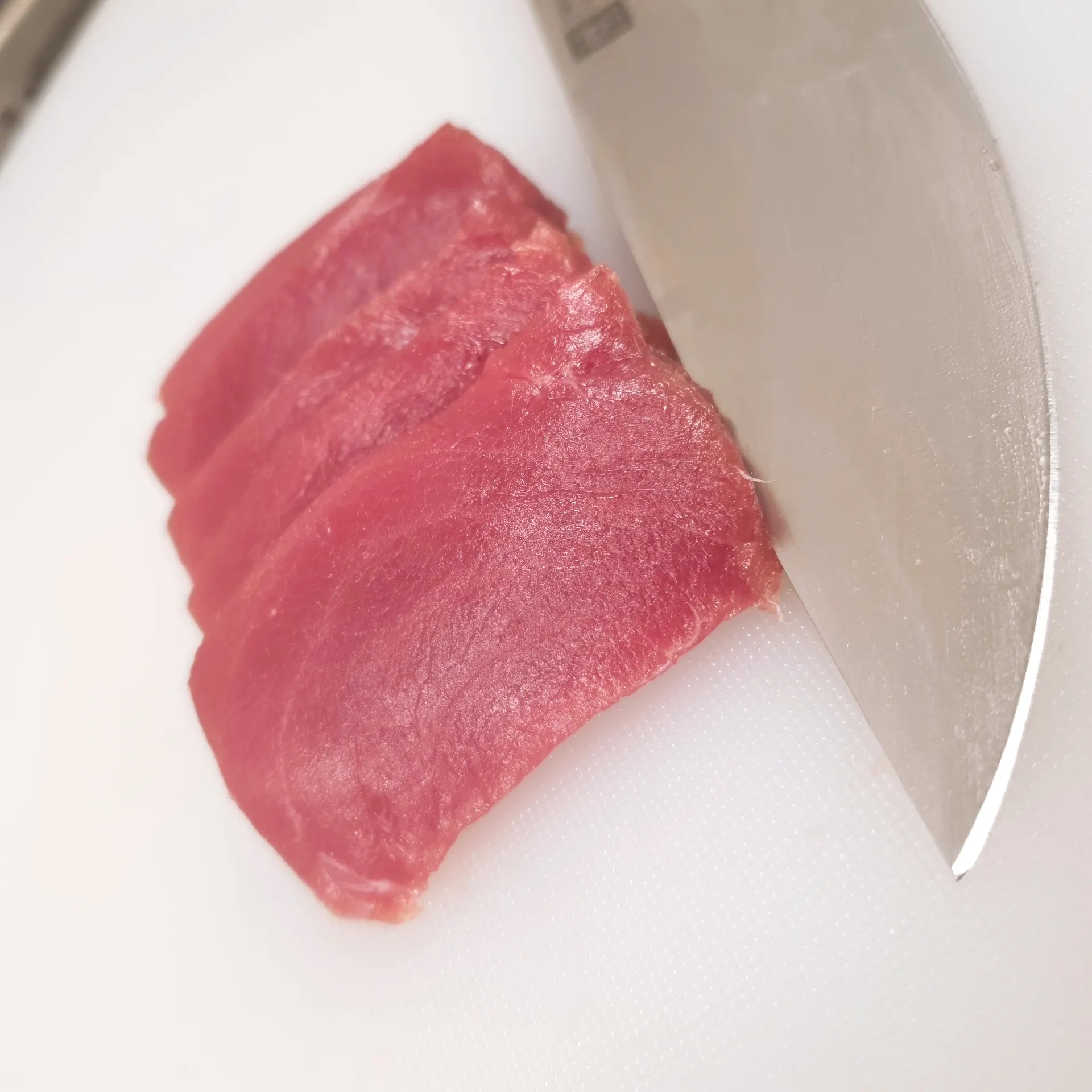
Transparency is part of how we operate, so here is an honest account of this week's Nagasaki Bluefin: the fish was larger than usual, farmed in a slightly different section of the Goto Islands area rather than the primary location. The Akami showed some blur of color — a reddish but not fully vivid tone — indicating fat interwoven into the lean muscle rather than a clean separation. This is characteristic of a fish with fat distributed broadly through the body rather than concentrated in the belly.
What this means practically: the Akami is less clean and direct than in a cooler-season fish, and the Otoro and Chutoro carry somewhat less fat than peak winter product. This is typical for mid-July. The fish is genuine Nagasaki Bluefin from Hosei Suisan and the quality remains well above anything available at retail in this market — but if you've been buying since spring, you'll notice the seasonal shift. We call it as we see it.
The cuts that hold up best through summer: Akami for direct flavor; Chutoro for the balance between lean and fat. Save Otoro orders for October onward when the fat content recovers with cooling water temperatures.
What Summer Fish Means — The Seasonal Cycle
Bluefin Tuna farmed in the Goto Islands, Nagasaki, follow a predictable seasonal fat cycle tied directly to water temperature. In winter and early spring, cold water slows the fish's metabolism; they eat heavily and accumulate fat in the belly. By June and July, warming water raises metabolic rate and the fish convert food to energy rather than stored fat. The result is a leaner fish — higher in lean protein, lower in the marbled fat that defines Otoro and premium Chutoro.
This is not a quality failure — it is the natural rhythm of the fish, the same cycle that makes winter Bluefin so prized in Japan. A summer fish at its seasonal peak is still extraordinary by any other standard. Understanding the cycle helps you order to the season: summer for Akami and Zuke preparations; autumn through spring for Otoro and Chutoro at their fullest.
Seasonal ordering guide: Peak Otoro/Chutoro — November through March. Best Akami year-round, with peak clean flavor in summer. Uni season — June through September for Hokkaido varieties. Hotaruika (firefly squid) — March through May.