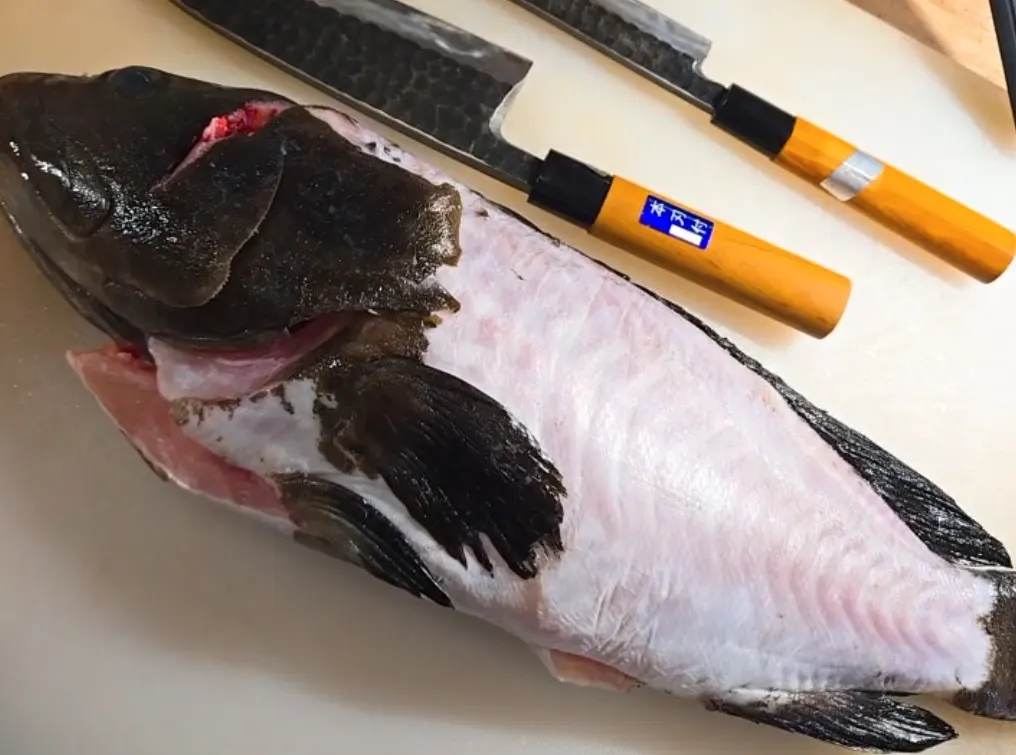
Kue — The King of White Fish
What is Kue (Japanese grouper) and is it available in Washington DC?
Kue (クエ) is a large, premium Japanese grouper from Ehime Prefecture — known as the "king of white fish" in Japan for its clean, rich flavour and firm texture. It commands high prices at auction and appears on top omakase menus. Sashimi DC carries Kue occasionally when available; check the weekly updates or visit in-store at 1608 14th St NW, DC.
This week we are receiving Kue (クエ, Japanese Grouper) from Ehime Prefecture — one of the most celebrated and expensive white fish in Japan, known in some fishing communities as the king of white fish. Kue is a large grouper farmed in the clean waters of the Uwa Sea; it commands extraordinary prices at auction in Japan and appears on the menus of only the most serious kaiseki restaurants during winter, when the fish reaches peak quality.
The flesh is white, firm, and dense with a richness that sets it apart from other white fish. The fat is not concentrated in the belly the way it is in Bluefin — it is distributed evenly through the muscle, giving every slice a consistent, luxurious mouthfeel. The flavor is deep and clean with a long finish. As sashimi it is exceptional. In Japan it is also the centerpiece of Kue nabe — a hot pot preparation where the collagen-rich bones and skin dissolve into the broth over hours, producing a deeply satisfying winter dish.
We are also receiving Hotate (Hokkaido Scallops) this week. Japanese scallops differ from American scallops in a fundamental way: they are never soaked in water or treated with sodium tripolyphosphate (STP), a practice nearly universal in the US commercial market that inflates weight and masks deterioration. The result is a scallop that is smaller by weight but far more concentrated in flavor — sweet, briny, and dense rather than the watery, pale product most people know. A few boxes of Hokkaido Uni will also arrive on Saturday.
A Special Request — Kue and Kochi for Ishi
This week's Kue order came about partly through a direct customer request from Ishi — who asked specifically for Kue and Kochi (鯒, Bartail Flathead) from Mie Prefecture. Kochi is a bottom-dwelling flatfish with lean, firm white flesh and an exceptionally clean flavor — another fish rarely seen in the United States. Both are here this week because someone asked, which is exactly how this is supposed to work. If there is a specific fish or cut you are looking for, ask. We will source it if we can.
On Japanese vs American scallops: The difference is immediately visible. An untreated Japanese Hotate is off-white to pale tan with a slightly firm surface. A treated American scallop is stark white, slightly wet, and often has a faint chemical smell on close inspection. The flavor difference at the table is equally stark. If you've written off scallops based on American product, this week is worth reconsidering.