Hotaruika Season Opens — First Shipment from Hamasaka
What is hotaruika (firefly squid) and when is it in season?
Hotaruika (蛍烏賊) are tiny bioluminescent squid from Japan, prized for their rich, briny flavour and delicate texture. The season runs February through April, with premium fish from Toyama Bay (mature females, net-caught) and earlier arrivals from Hyogo. Sashimi DC carries them lightly boiled at source during the season — available in-store and via same-day delivery.
The first Hotaruika (蛍烏賊, Firefly Squid) of 2025 has arrived, and it marks the official opening of the season. This shipment comes from Hamasaka Port in Hyogo Prefecture — on the Sea of Japan coast, where the squid begin to appear in early February before the main Toyama Bay harvest gets fully underway in March and April.
Hotaruika are small bioluminescent squid, each only a few centimeters long, that rise to the surface of certain bays in mass spawning runs during late winter and spring. The entire animal is eaten whole. The flavor is intensely savory and slightly sweet, with a richness that makes them one of the most distinctive ingredients of the Japanese spring season. Later in the season — March onward — we will receive fish from Toyama Bay, the most celebrated Hotaruika origin, where the squid arrive in such volume that the bay glows blue at night during peak spawning.
Hotaruika are available now at the storefront. Check the online shop for current availability for delivery orders.
Hours Update — Shortened to 11:30 am – 8:00 pm
We have slightly shortened our operating hours to 11:30 am – 8:00 pm. Traffic after 8:00 pm has been light enough that staying open later wasn't serving anyone well. The new hours are posted on the door and updated on Google Maps. For delivery orders, you can now select your preferred delivery hour within the same day when placing your order online.
Boston Natto — and Sweet Miso Worth Knowing About
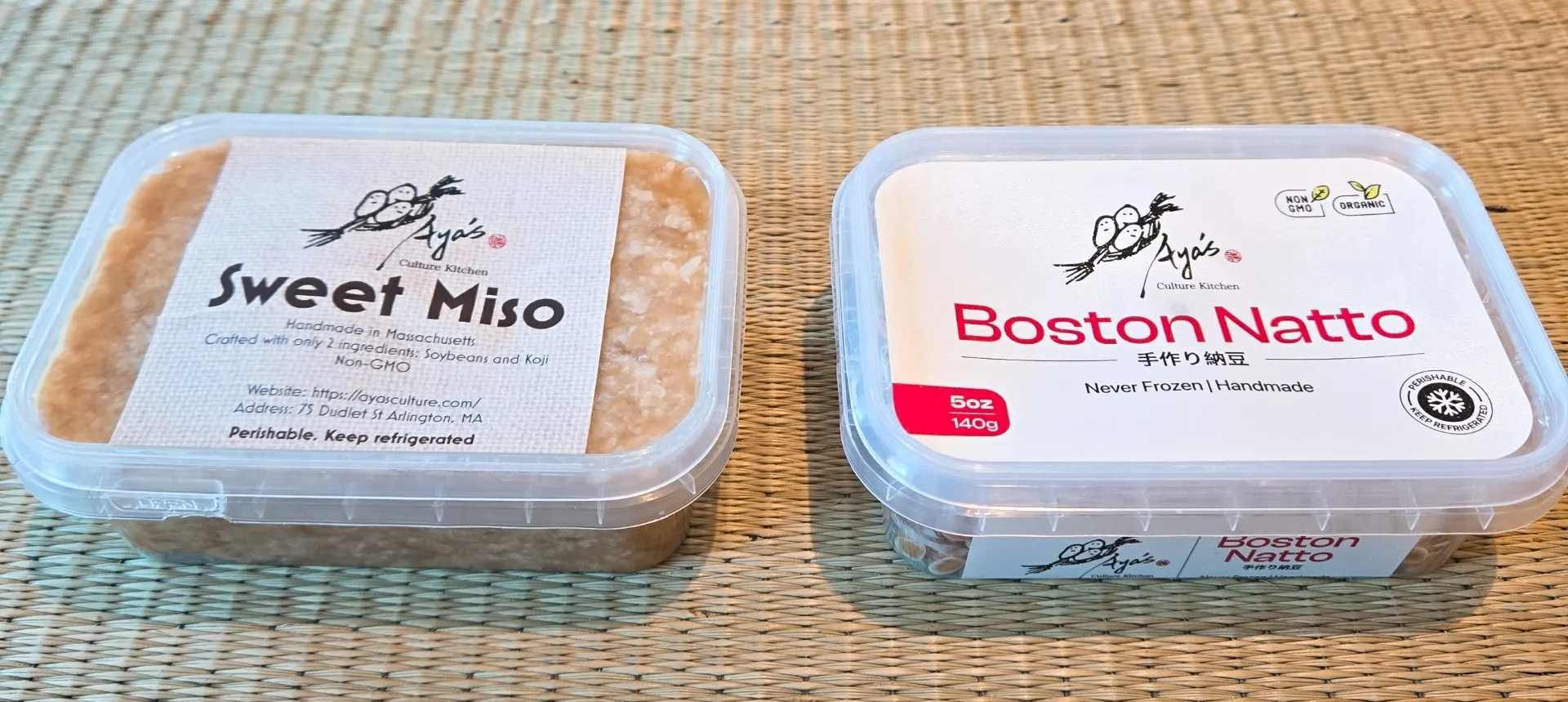
Two fermented products at Rice Market worth flagging this week, both from Aya's Culture Kitchen (@ayas_culture_kitchen):
Boston Natto — freshly made natto from a small producer in Boston, as opposed to the frozen, long-traveled packs that are the standard in Japanese grocery stores in the United States. The difference is significant. Natto is a living fermented food — it continues to develop after production, and the version you taste within days of being made is categorically different from one that has been frozen, shipped internationally, and thawed. The flavor is more nuanced and less aggressively pungent; the texture is properly sticky without being slimy; the aroma is present but clean. If you have tried frozen natto and been put off, Boston Natto is worth approaching as a different ingredient.
Sweet Miso — also from Aya's Culture Kitchen, with an unusual chunky texture that sets it apart from the smooth pastes sold elsewhere. The sweetness is delicate, with a character that Keita compares to Amazake. The best preparation, he suggests, is broiling or lightly torching the surface — a few minutes under a grill or thirty seconds of direct torch heat caramelizes the natural sugars and produces a snackable result that is genuinely hard to stop eating.
This Week's Fish
Alongside Hotaruika: Hiramasa (平政, Yellowtail Amberjack) arriving Friday — a cleaner, less fatty alternative to Kanpachi with a firm texture and clear flavor. Hotate Scallops and Kinmedai are also available. Nagasaki Bluefin Tuna in all cuts as always.
On Hotaruika preparation: For the freshest product, try them lightly boiled and served with vinegared miso (sumiso) — the classic preparation. For something more unexpected, the oil-based pasta method described in our October post transfers the squid's flavor into the olive oil in a way that makes the whole dish taste of the sea. Both approaches work; the pasta version is more dramatic.