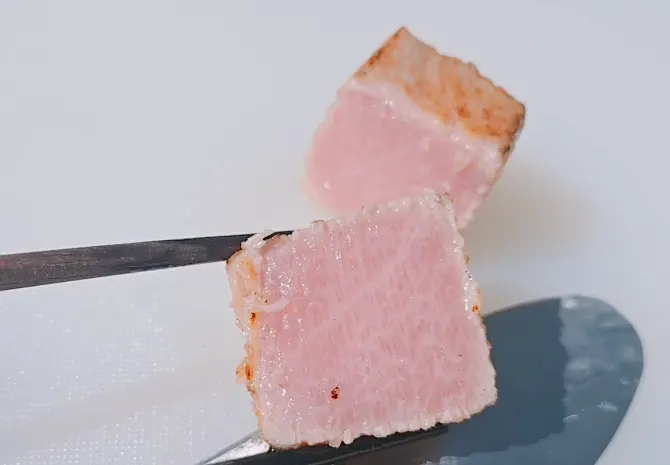
What is the Aburi technique and can you sear Uni at home?
Aburi (炙り) is the Japanese technique of searing fish with a kitchen torch. For Bafun Uni, a quick torch pass concentrates the sweetness and adds a warm, caramelized top layer. It's done at Sashimi DC's counter and can be replicated at home with a standard kitchen torch. Available in-store and via same-day delivery.
This Week's Uni — Bafun from Hokkaido, Price Down
Bafun Uni from Hokkaido again this week — and the price is slightly lower than last week, which is a welcome shift after several weeks of elevated market prices. The quality is consistent with what we've been carrying: deep golden color, assertive brininess, clean sweet finish. Reserve online before the weekend if you plan to pick up.
This Week's Bluefin Tuna — A Note on Summer Quality
The Nagasaki Bluefin this week was notably fatty despite being summer — an unusual characteristic for June fish. The Akami showed some blurring of color, indicating fat interwoven into the lean muscle, which is actually a positive quality marker. The Otoro color was slightly off by visual inspection at the processing facility, but the fat itself was genuine. The fish ate well.
Summer is typically when Bluefin carries less fat, so a week like this — where the fish surprises in the other direction — is worth noting. If you've been holding off on Otoro through June, this week is a good moment.
New Souvenir — Japanese Pasta Sauces
Three Japanese pasta sauces added to the souvenir selection this week, each one a collision of Italian form and Japanese ingredient:
- Uni cream sauce — sea urchin-based cream sauce for pasta. Rich, briny, deeply umami. Toss with spaghetti, finish with a little butter and fresh pasta water.
- Sardines & fennel — a southern Italian spirit executed with Japanese precision. Clean, fragrant, slightly sweet from the fennel.
- Red snow crab & tomato — the sweetness of Hokkaido snow crab against a bright tomato base. Pairs well with a light, acidic white wine.
These are available at the storefront while supplies last.
Seared Sashimi — The Next Step
Once you've tasted our fish as straight sashimi, the natural next step is aburi — seared sashimi. A quick pass of a kitchen torch over the surface of a rich cut produces a dramatic transformation: the exterior fat renders briefly, the Maillard reaction kicks in, and a nutty, caramelized aroma rises from the fish that is completely absent in the raw version.
The cuts that respond best to torching:
- Otoro — the high fat content means the surface renders quickly and evenly. The contrast between the warm, slightly charred exterior and the cool, melting interior is exceptional.
- Kanpachi (Greater Amberjack) — the skin side is particularly good torched. The skin stays on, crisps under heat, and delivers an aroma closer to grilled fish than raw.
- Sasshu Salmon — the fat distribution in Kagoshima salmon makes it an excellent candidate for aburi. The flavors open significantly with heat.
We carry kitchen torches and gas cartridges at the storefront. The technique takes thirty seconds to learn and immediately elevates the experience. Ask us for a demonstration when you're in.
Aburi technique: Hold the torch 8–10cm from the surface and keep it moving — you want to render the fat, not cook the fish. Five to eight seconds per piece is usually enough. The fish should still be raw at the center.