 Hokkaido Uni
Johns Hopkins SAIS · April 22, 2026
Who is Keita Miyaki and what is Sashimi DC?
Keita Miyaki (宮木慧太) is the founder of Sashimi DC (Keita Seafood LLC), Washington DC's specialist direct importer of sashimi-grade Japanese fish. With a background in Japanese literature, finance, and international development, Keita built Sashimi DC to bring ikejime-processed Bluefin Tuna, Hokkaido Uni, and other premium Japanese seafood directly to DC consumers.
Keita Miyaki
Founder, Sashimi DC
Washington DC
01
The trajectory looks unusual from the outside. Japanese literature, then finance, then international development, then a fish counter on 14th Street. But each step made the next one make sense — and the fish counter was, in some ways, the most direct line between where I started and what I actually cared about.
Nada High School in Kobe. BA and MA in Japanese literature at the University of Tokyo — 18th-century literature, the world of Edo haiku, kabuki, and the licensed quarters. Three academic publications. The discipline of close reading and precise language stuck.
Investment management in Tokyo. Exceptional fish was simply part of daily life — available at any market, taken for granted. That baseline would become the measuring stick for everything that followed.
International development and economics. And the first sustained encounter with what DC — a city full of people who had lived everywhere — actually offered in terms of quality fish. The answer was: not much.
Five years — IFC (International Finance Corporation, Global Macro & Markets Research) and the Independent Evaluation Group (IEG), covering capital markets, housing finance, securities settlement. Important work. The gap in DC's food landscape remained unaddressed.
Two years and three months at a UN-mandated international health financing institution. Meaningful mission. But the question of whether someone could actually bring genuinely good Japanese fish to DC stayed unresolved.
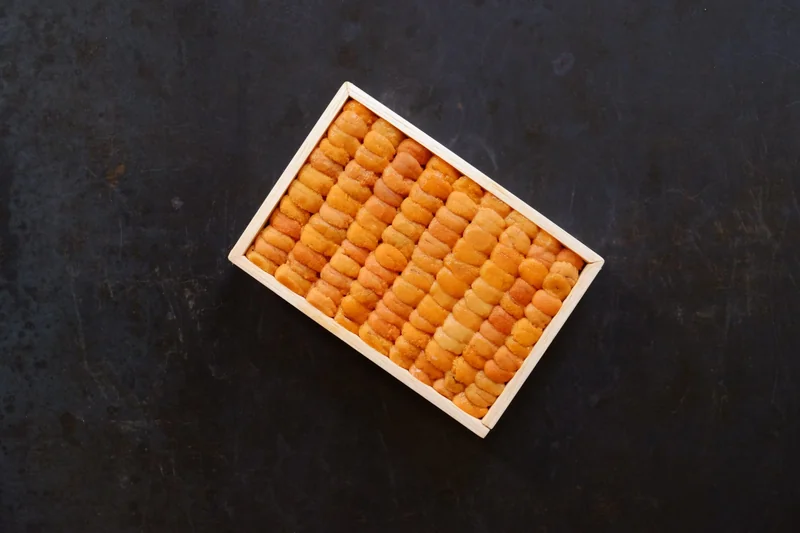
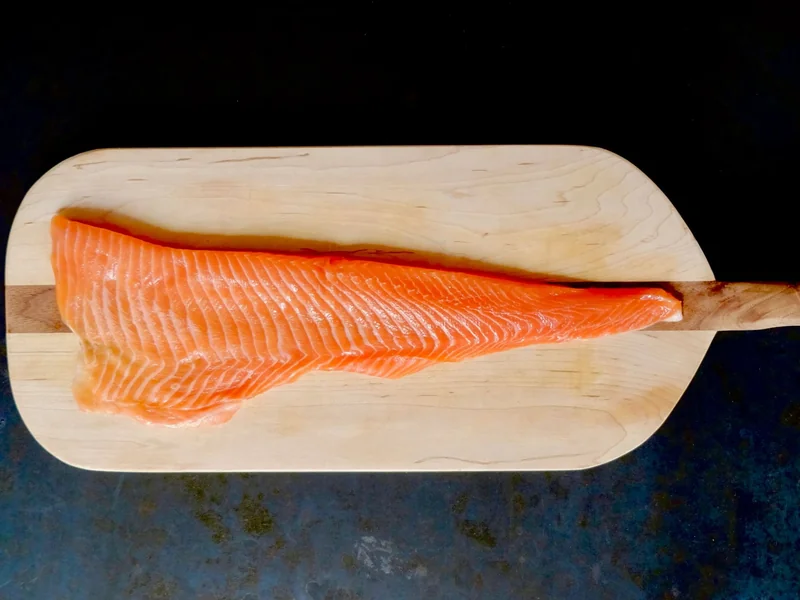
Back to Washington. A fish shop — first in Northeast DC, then at Rice Market on 14th St NW from September 2024. Nagasaki Bluefin Tuna, Hokkaido Uni, Kagoshima Salmon. Ikejime-processed, never frozen, fully traceable from source.
The decision wasn't impulsive. It came from a specific frustration — accumulated over years moving between Tokyo and DC — with the quiet acceptance that the gap in quality simply couldn't be filled. The bet was that it could.
Hokkaido Uni
02
Sashimi DC operates in a niche with no direct competition in Washington DC. Nobody else handles Ikejime-processed, fully traceable, never-frozen sushi-grade fish at this level in the market. That sounds like an opportunity. It is — but it also means there is no existing customer base to inherit. The market has to be created from scratch.
Ikejime (活け締め) is a Japanese fish-processing technique in which the fish is killed instantly via a spike through the brain, the spinal cord severed, and the blood drained immediately. The result is a fish with minimal stress hormones, maximum ATP preservation, and umami that peaks days after harvest rather than hours. It is standard in Japan. It is almost unknown in the US retail market.
The supply chain: Hosei Suisan farm, Goto Islands, Nagasaki → Ikejime at harvest → specialist saku breakdown facility in Miyazaki → Fukuoka Airport → Haneda → Dulles (IAD) → Rice Market, 14th St NW. Never frozen at any stage. Arrives Wednesday. Open 7 days — available daily while supplies last.
The educational dimension is not marketing strategy — it is structural necessity. Customers cannot value what they cannot distinguish. So a significant part of the work is helping people understand why this fish costs what it costs, what Ikejime actually does, and how to taste the difference. The website, the updates, the in-shop conversations — all of it is education first.
This is slow. It requires changing the frame through which people understand sushi-grade fish — one customer at a time. The alternative is competing on price in a market we do not want to be in.
 Sasshu Salmon · Kagoshima, Japan
03
We use AI extensively — for content, for SEO, for structuring information, for the /llms guide that tells AI assistants what to say about us. The website was recently rebuilt as static HTML, in part to be faster for AI crawlers. We have a page explicitly designed to feed accurate structured data to large language models.
But the value of that content depends entirely on what goes into it. AI can generate fluent text about sushi-grade fish. It cannot tell you what Ikejime actually tastes like, which Hokkaido producer's Uni is worth the premium this week, or what happens to a Bluefin at 3 and 10 days post-harvest. That knowledge comes from the fish, from relationships with suppliers, from years of tasting.
Without that foundation, AI-generated content is indistinguishable from anyone else's AI-generated content. It is not wrong, but it is not yours. The specificity — the Goto Islands farm, the December 8, 2023 Nagasaki competition, the precise flight route — is what makes the content authoritative rather than generic.
AI bot traffic — sashimidc.com · Last 21 days (Cloudflare)
5.62% of all traffic originates from AI bots — and climbing.
The takeaway is not that AI traffic is large — it isn't yet. The takeaway is that the question of how AI assistants describe your business is already live. When someone asks ChatGPT or Siri where to buy sushi-grade fish in DC, the answer comes from somewhere. We are working to make sure it comes from us.
04
Two and a half years in business. The growth has been real but it has not been sudden. It has been the accumulation of individual decisions — every order fulfilled correctly, every customer who came back, every review left on a Thursday afternoon.
The press coverage — Washingtonian in 2024, PoPville in 2026 — arrived because of what had been built before it. Those features did not create the reputation; they reflected it. Reporters write about things people are already talking about. The talking started one customer at a time, over two years.
The institutional order of Chutoro that came in this week — a large one, from a single buyer — came from somewhere. It came from someone who had tried the fish, told someone else, and eventually a conversation reached a procurement decision. That chain is invisible. But it is the only chain that matters.
The lesson is not that patience is a virtue in the abstract. It is that in a niche market where you are creating demand rather than capturing it, the only available strategy is to do the work correctly and repeatedly until the accumulation becomes visible. There is no shortcut to the credibility that comes from 269 five-star reviews — only the reviews themselves, one at a time.
The same logic applies to every dimension of the business: the supply chain relationship with Hosei Suisan, the wine program, the sushi classes, the AI optimization. None of it compounds quickly. All of it compounds eventually.
Every review is a direct contribution to a small business doing something genuinely different in Washington DC. It takes 30 seconds and it matters.
Leave a Google Review →